
Dry, dull or slightly rough
Care for it at home
If there is no deep damage, cleaning, thorough drying and a thin coat of suitable care product are usually enough.
View care balmCare
Short version
A wooden board does not need complicated care. It needs to be cleaned, allowed to dry properly and refreshed when the surface feels dry.
Standing water is harder on wood than everyday cutting.
Air should reach both sides so the board can dry evenly.
A thin layer of suitable care product keeps the surface more pleasant.
If oil is no longer enough, sanding or refurbishment may be useful.
Next step
The condition of the surface matters more than the age of the board. Choose the path that matches the marks you can see.
Dry, dull or slightly rough
If there is no deep damage, cleaning, thorough drying and a thin coat of suitable care product are usually enough.
View care balmDeep cuts, stains or an old coating
Send us a photo before sanding further. We will tell you honestly whether care at home is enough or whether refurbishment within Germany may be worthwhile.
Send photos for assessment Understand the refurbishment serviceCracks through the board, severe warping or deeply absorbed contamination may rule out refurbishment. The workshop service is currently available only within Germany.
Sanding. Wiping. Oiling. No shortcuts. No unnecessary steps. Just what actually works.
The board must be completely dry before sanding.
This removes wear, stains and rough areas first.
That helps level the surface more evenly.
Remove dust and check the surface before continuing.
For most boards, this is enough. Go to 240 only if needed.
Use a thin coat, let it soak in, then wipe off the excess.
The surface will look richer, cleaner and more balanced again.
Oil your board whenever the surface starts to look dry or dull. For regular use, every few weeks is often enough.
Use food-safe finishes such as linseed oil varnish or a proper care balm. Avoid random household oils and cheap alternatives.
Yes. Use controlled sanding and proper grit progression. End grain boards can be restored well, but they require a bit more precision.
No dishwasher. No soaking. No cheap oils. No aggressive sanding without control.
For damaged or warped boards, professional restoration makes more sense.
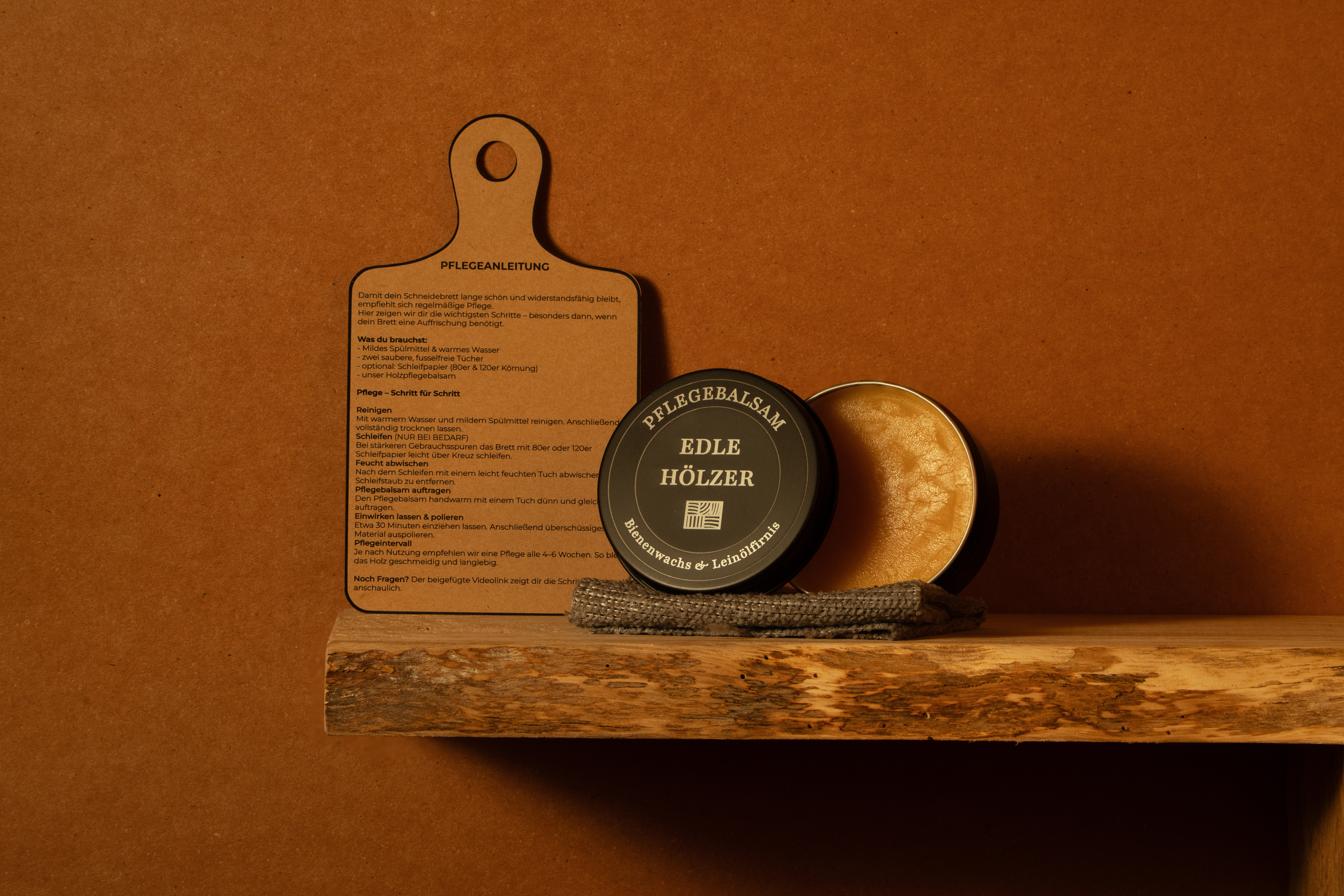
Our care product
Food-safe. Handmade. No additives. One application is enough. Your board is protected immediately.
Buy care balm