
Short answer: not just any cooking oil
A cutting board should be treated with a suitable wood care oil or balm. Olive oil, sunflower oil and rapeseed oil may become sticky or unpleasant over time.
Oil is not a substitute for cleaning. It supports the surface, but water, heat and poor drying can still damage wood.
Oil is not always enough
Care for it at home or request an assessment?
A dull surface usually needs care. Deep damage needs an honest assessment first.
Dull, dry or slightly rough
Care for it at home
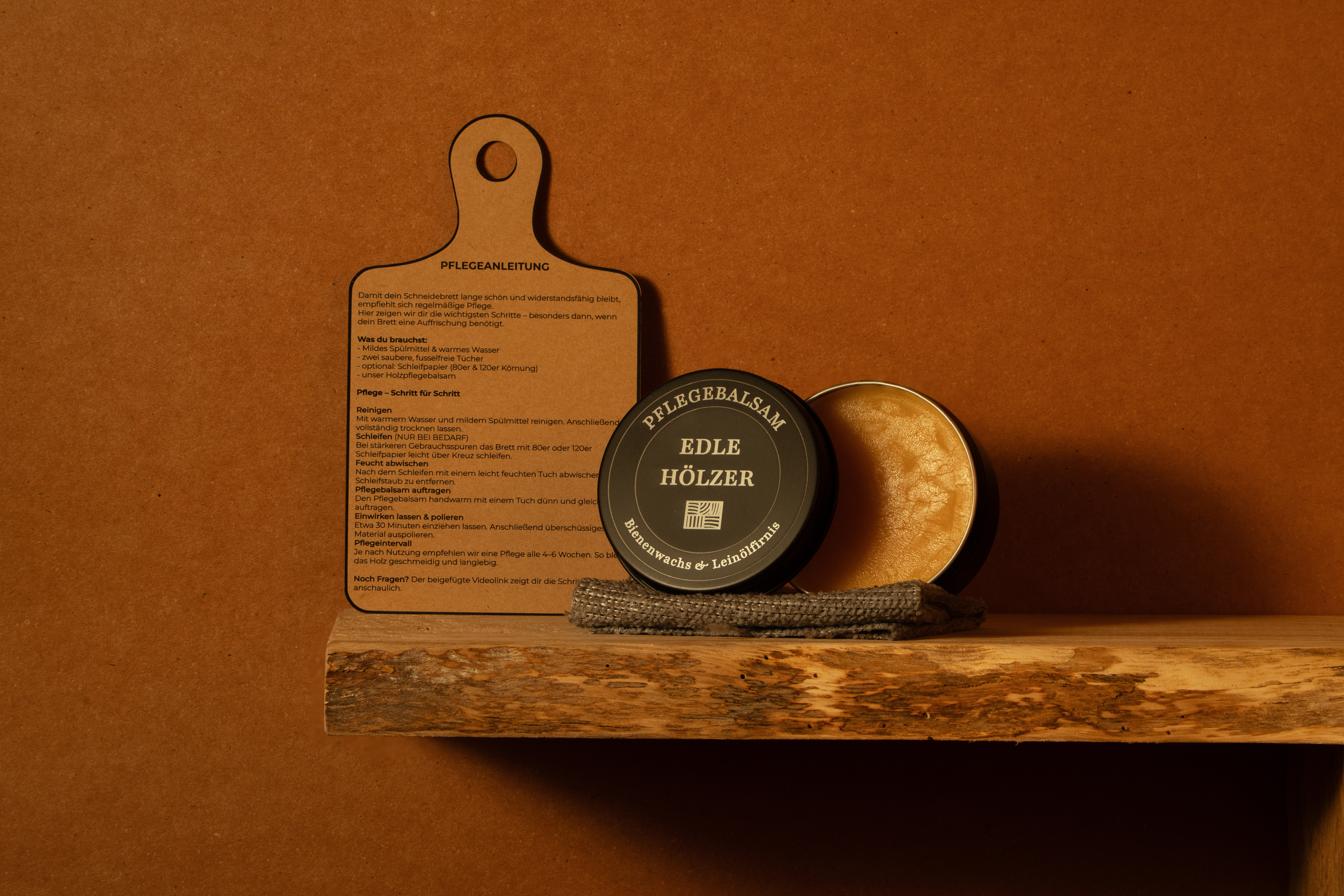
Clean the board, let it dry completely and apply a thin coat of a suitable wood care product.
View care balmDeep cuts, strong stains or persistent odour
Request a photo assessment
Oil cannot repair deep damage. Send us a photo before sanding further or applying an unsuitable finish.
Send photos for assessment When refurbishment makes senseCracks through the board, severe warping or problematic contamination may rule out refurbishment. The workshop service is currently available only within Germany.
What we look for in a care product
The product has to suit wooden surfaces, the intended food-contact context and the way the board is used. It should penetrate the surface, be applied thinly and leave no sticky film.
A balm with oil and wax components can add a little more surface protection when it is formulated for this use.
Linseed oil varnish needs care
Linseed oil varnish can be useful for wood when the product is suitable, applied correctly and allowed to cure fully. It should not be treated as a generic DIY shortcut.
When oil is not enough
If the board has deep cuts, cracks, strong discoloration or warping, oil alone will not solve the issue. Sanding or professional refurbishment may be the better next step.