Checking the beam
We look at cracks, grain direction, old joints and substance. If the material does not carry, it does not become an Erbstück.

Limited timber-frame series
The material
The Erbstück series starts with historic oak beams from old half-timbered houses. This wood is not clean, uniform or endlessly available. It comes with cracks, colour shifts, old joints, nail marks and areas that only reveal themselves once the beam is opened.
That is why every piece is selected individually. Not every beam is suitable for a cutting board. Some timber is too cracked, warped, metal-loaded or too weak in the wrong places. What remains is rare, and it defines the frame of the board that can be made from it.
The goal is not a decorative object. An Erbstück should find a place in the kitchen, at the table or as a gift that can be used, cared for and passed on.
Decades or centuries of drying are an advantage, but not a guarantee. What matters is whether the beam stays stable, clean and responsible to work with after cutting.
From beam to Erbstück
Selected moments from the making of an Erbstück. The timber is prepared, joined, shaped, sanded and oiled, while its individual character remains visible.
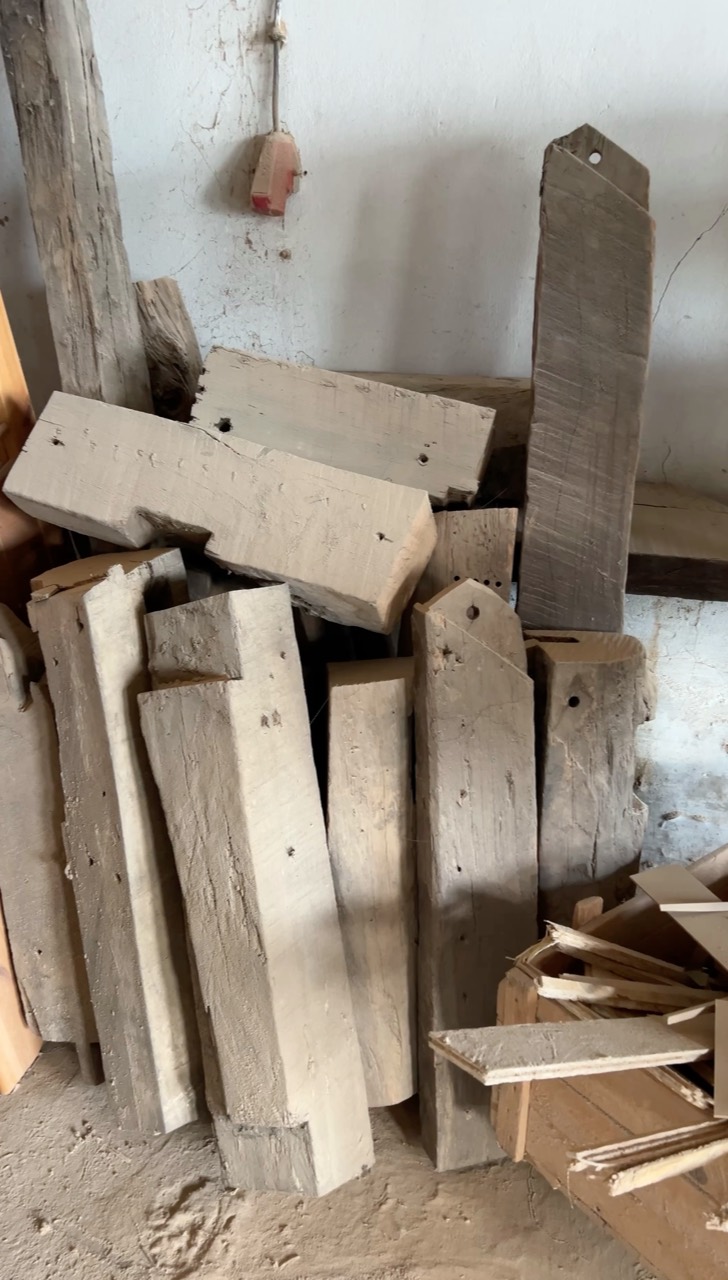
01 · Material
Historic beams with old joints and signs of earlier craftsmanship. This is where selection begins.
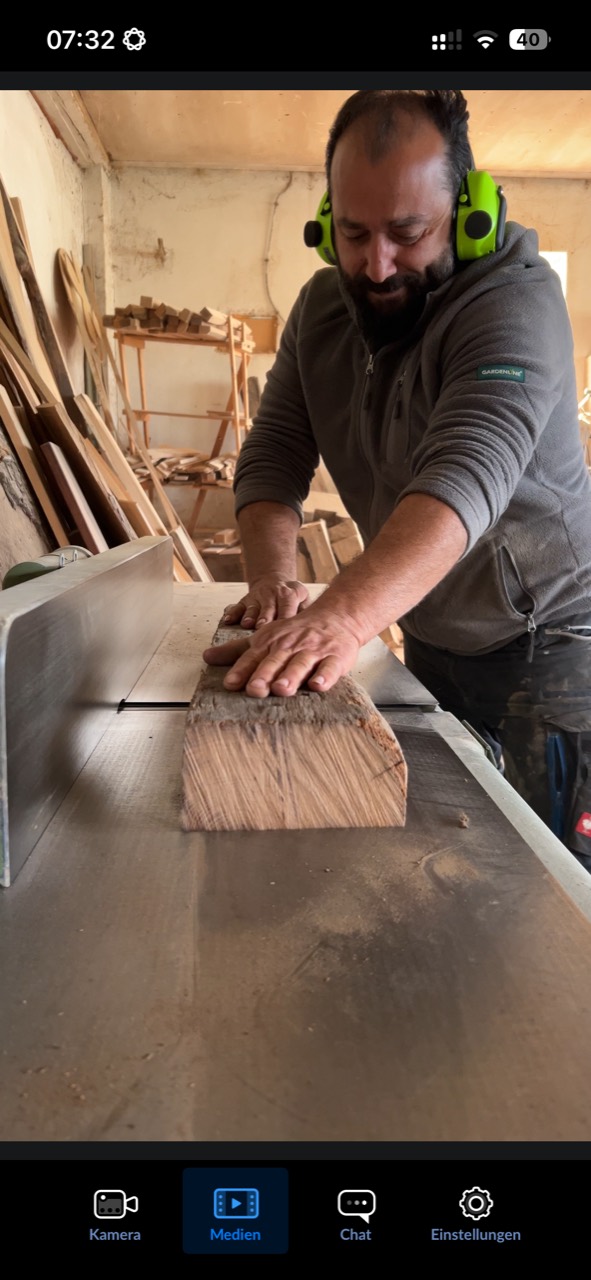
02 · Planing
The historic beam passes over the surface planer.
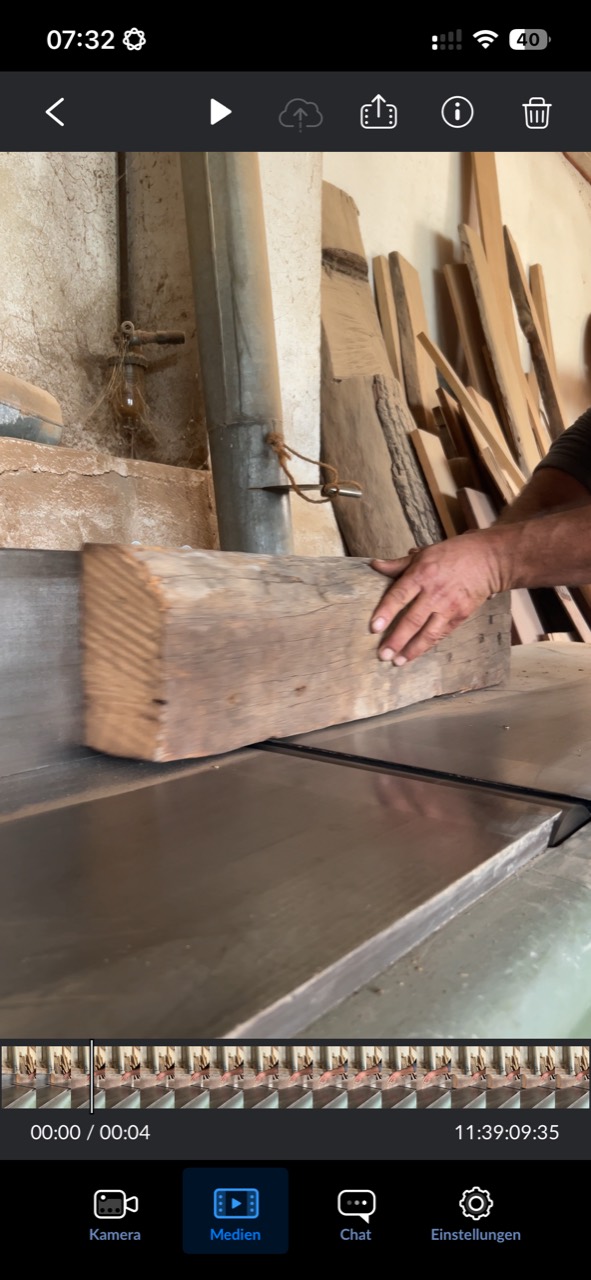
03 · Planing
The beam is guided along the fence for the next stage.
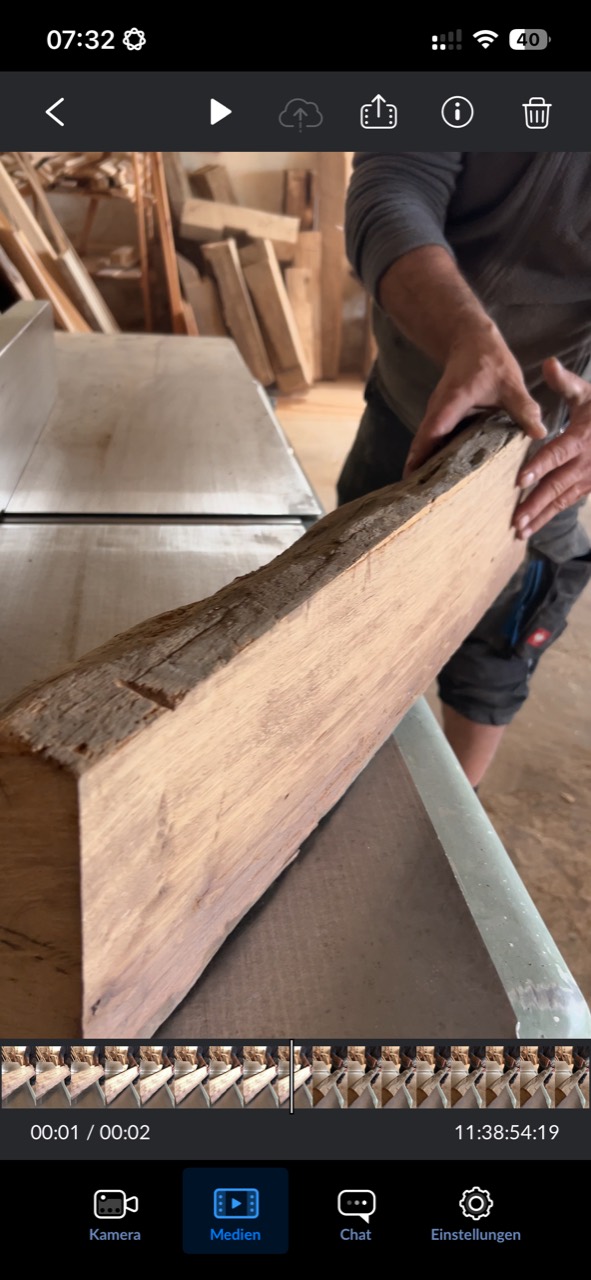
04 · Planing
Freshly worked wood and the original rough surface remain visible side by side.
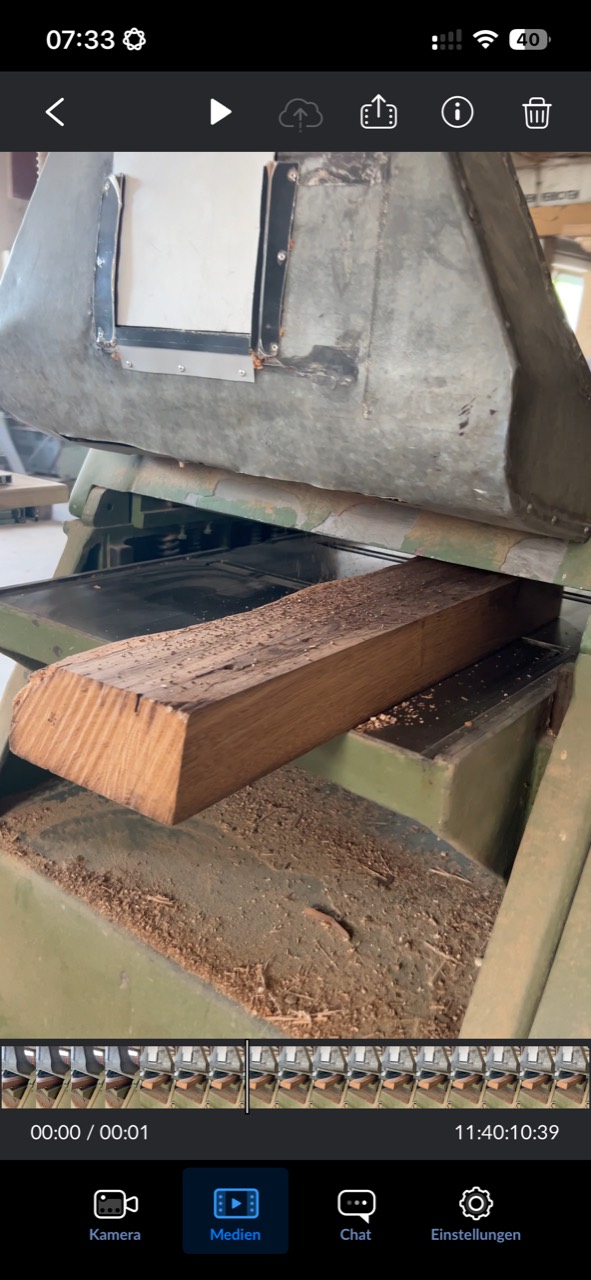
05 · Planing
The beam passes through the thickness planer.
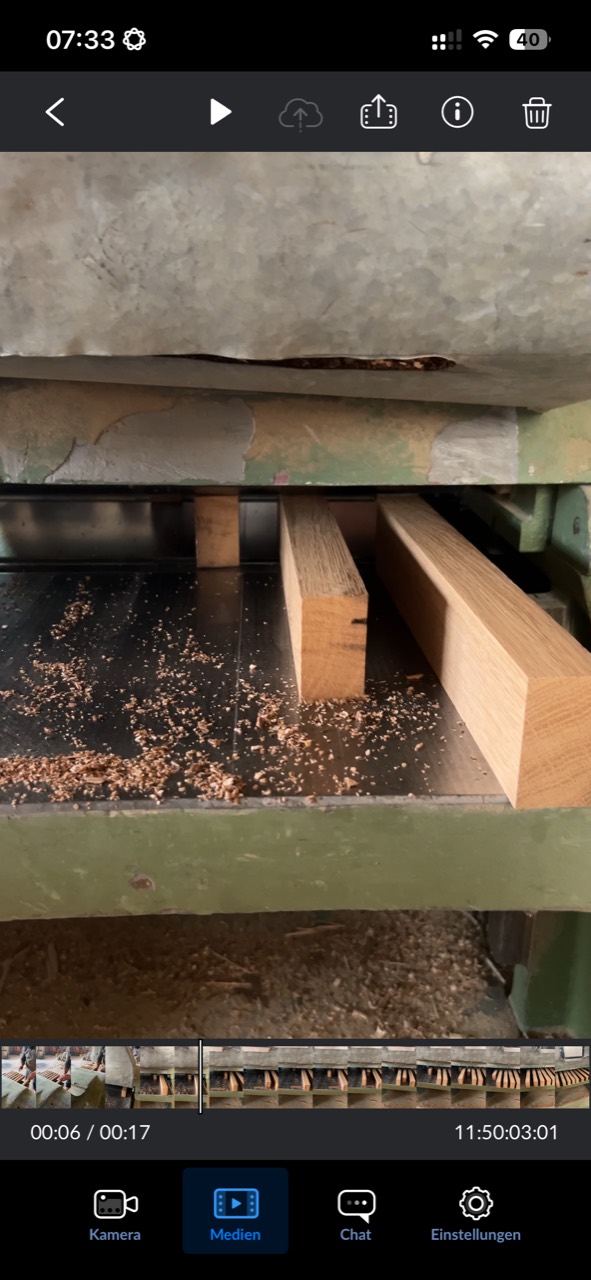
06 · Planing
The cut pieces are also planed to thickness.
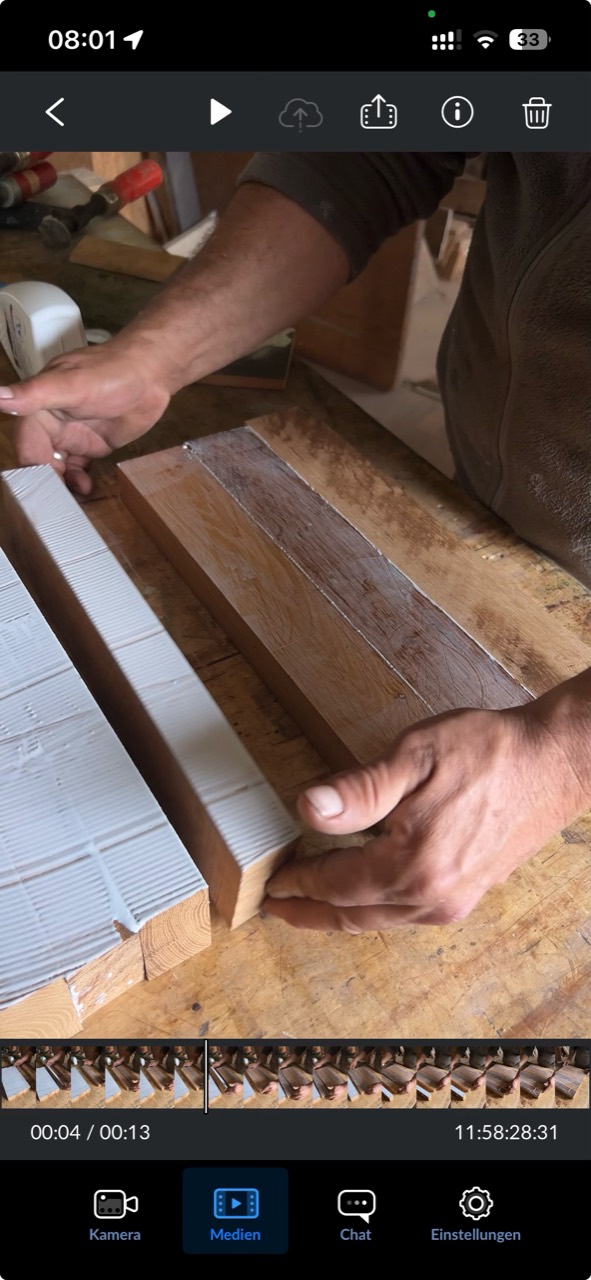
07 · Assembly
The glue-coated pieces are brought together to form the board.
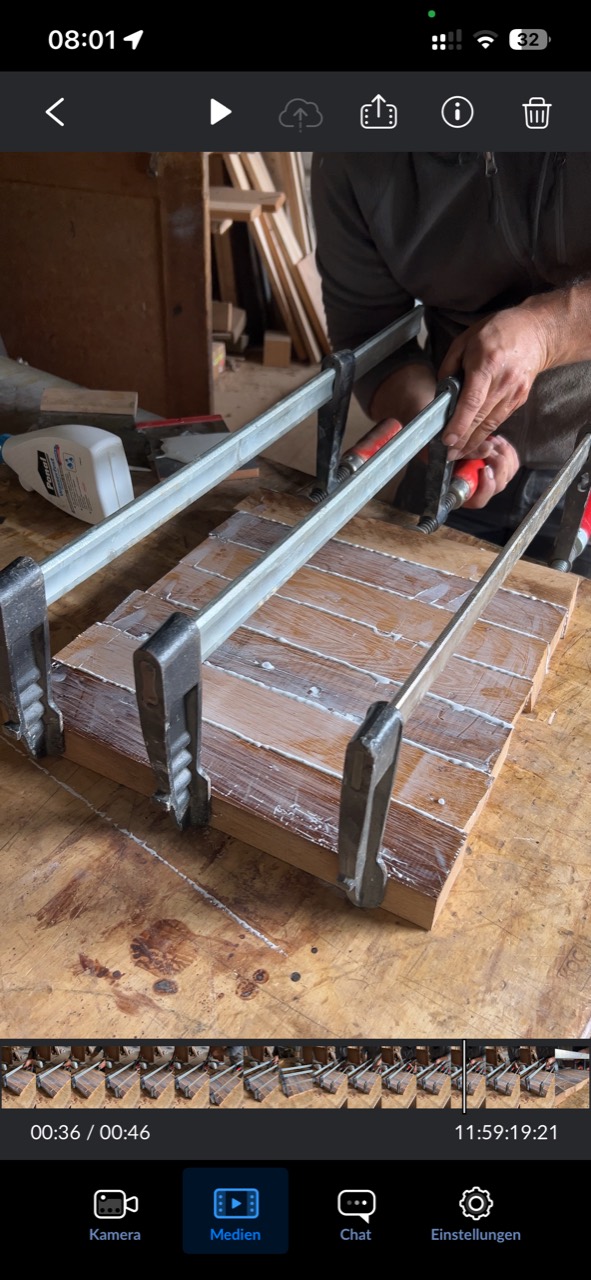
08 · Assembly
Clamps hold the joined pieces while the glue sets.
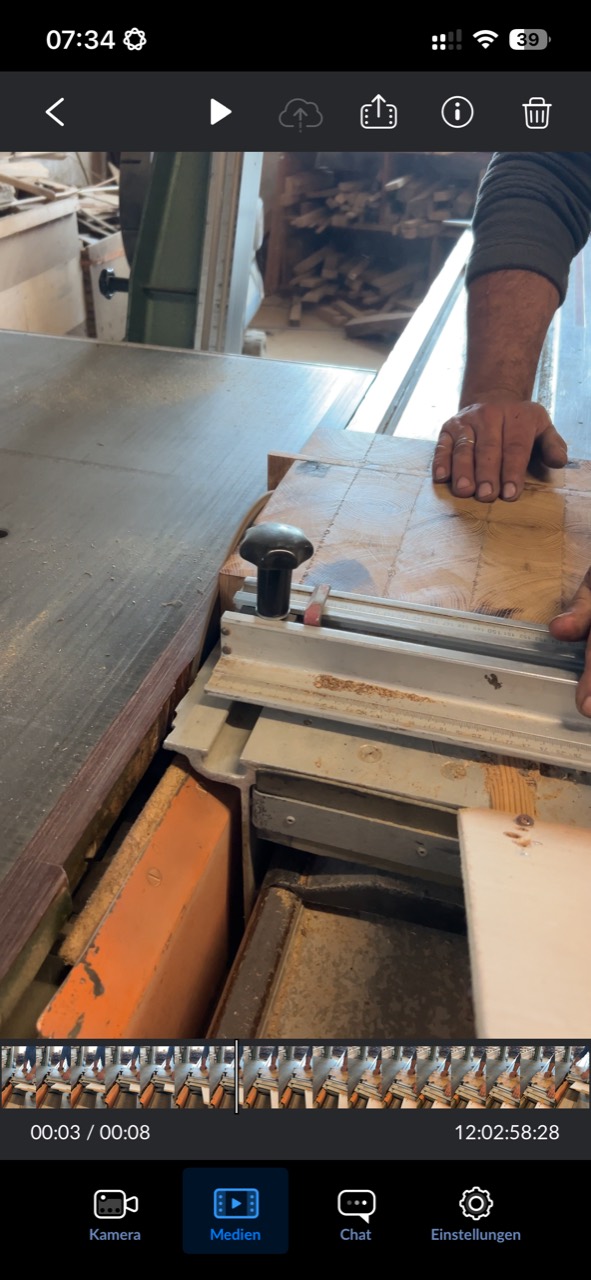
09 · Assembly
The glued assembly is cut to accommodate the beech accents.
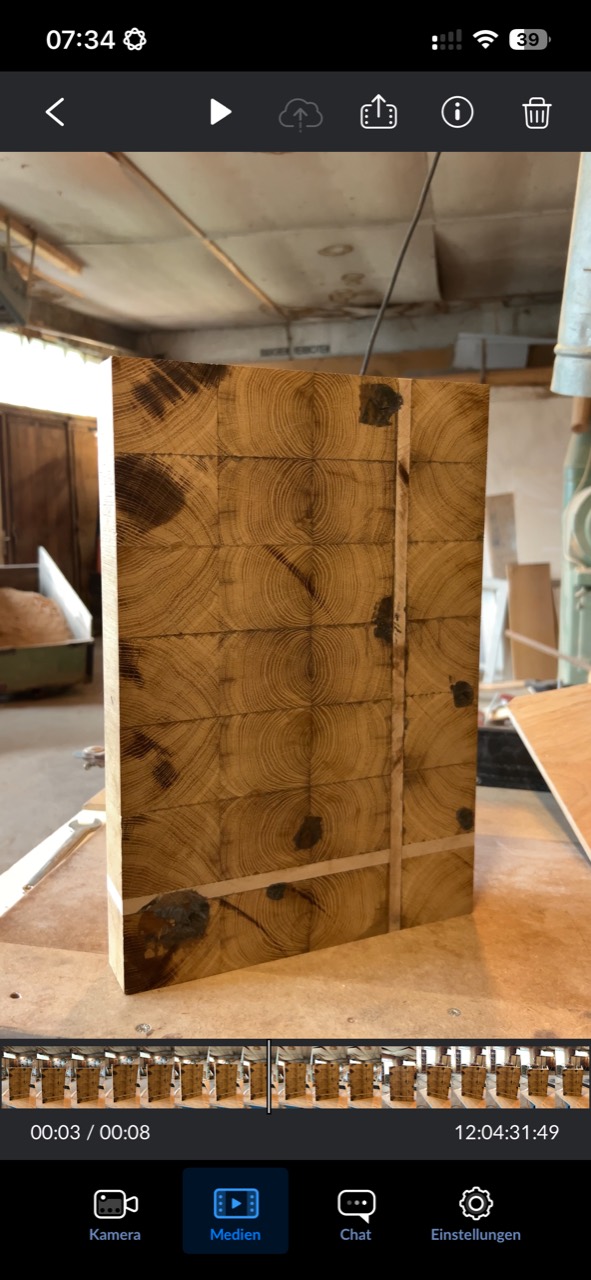
10 · Assembly
End grain and beech lines now form one surface, ready for further finishing.
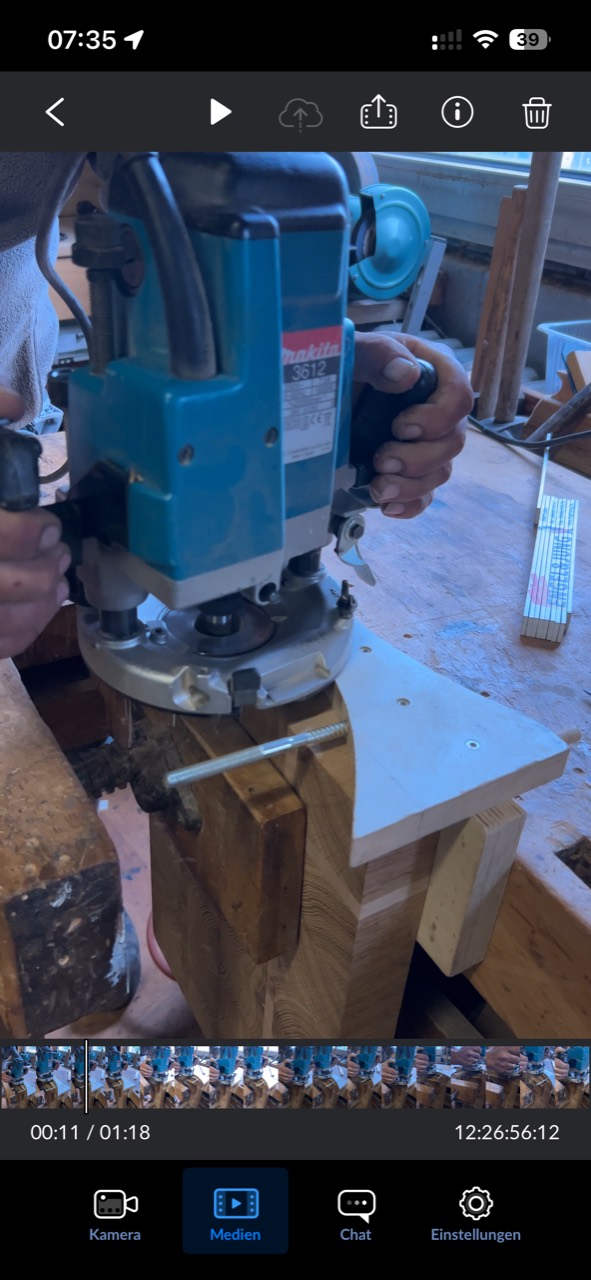
11 · Shaping and sanding
The router cuts a grip recess into the side of the board.
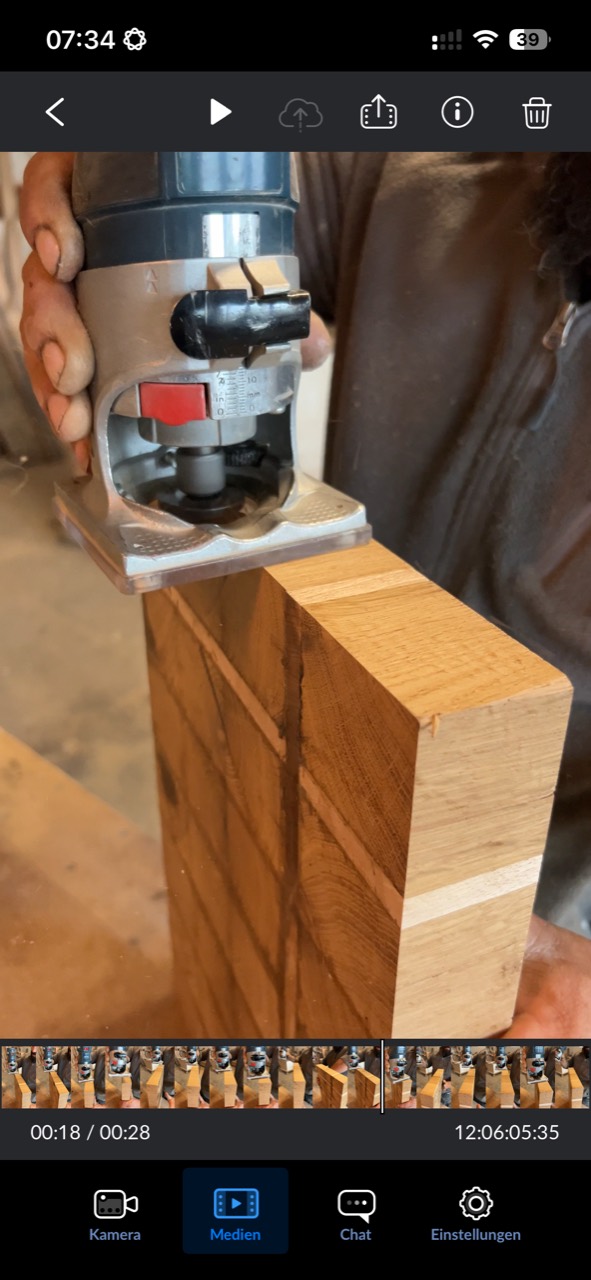
12 · Shaping and sanding
A chamfer helps prevent the outer edges from chipping during further work.
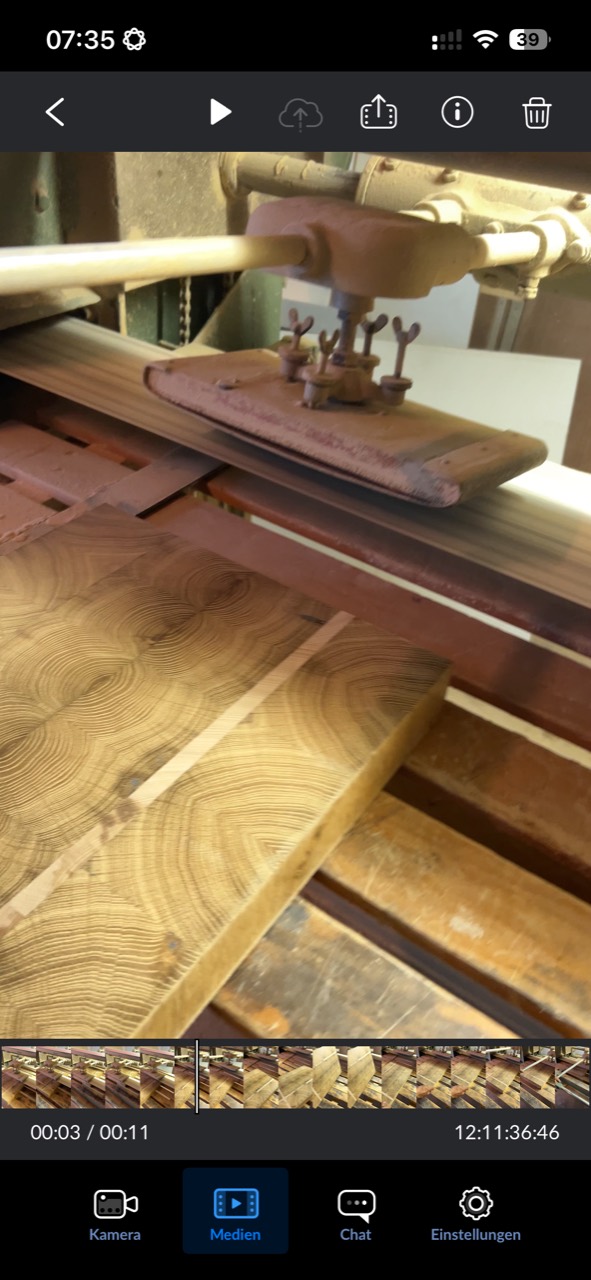
13 · Shaping and sanding
The board is worked on the belt sander.
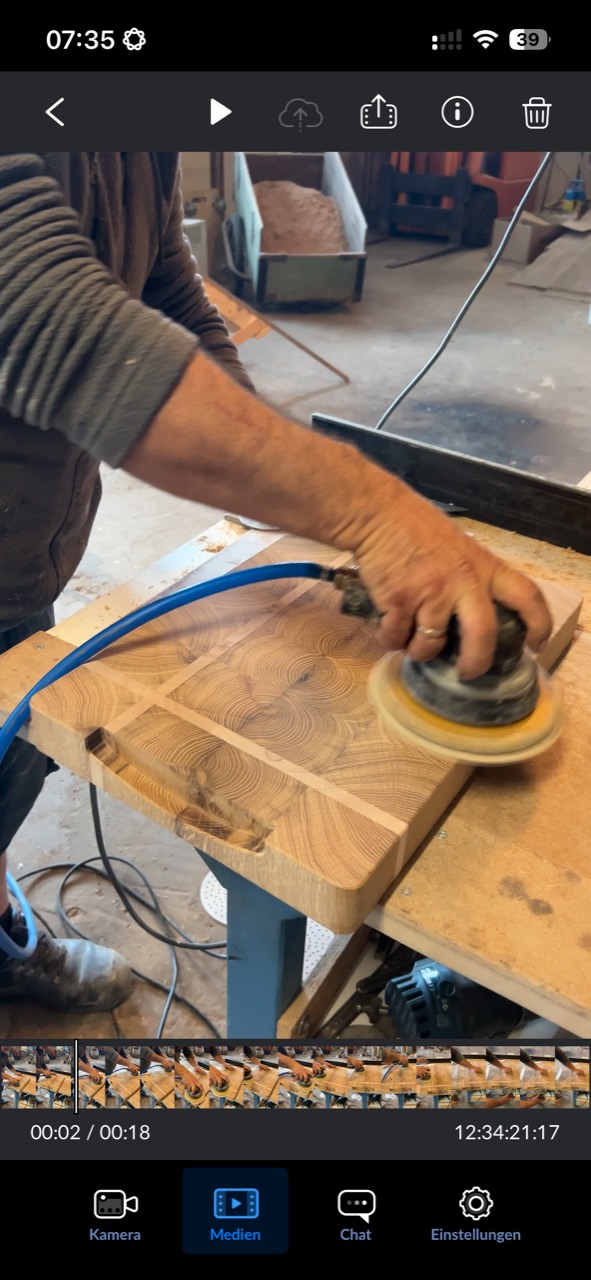
14 · Shaping and sanding
An orbital sander further refines the surface.
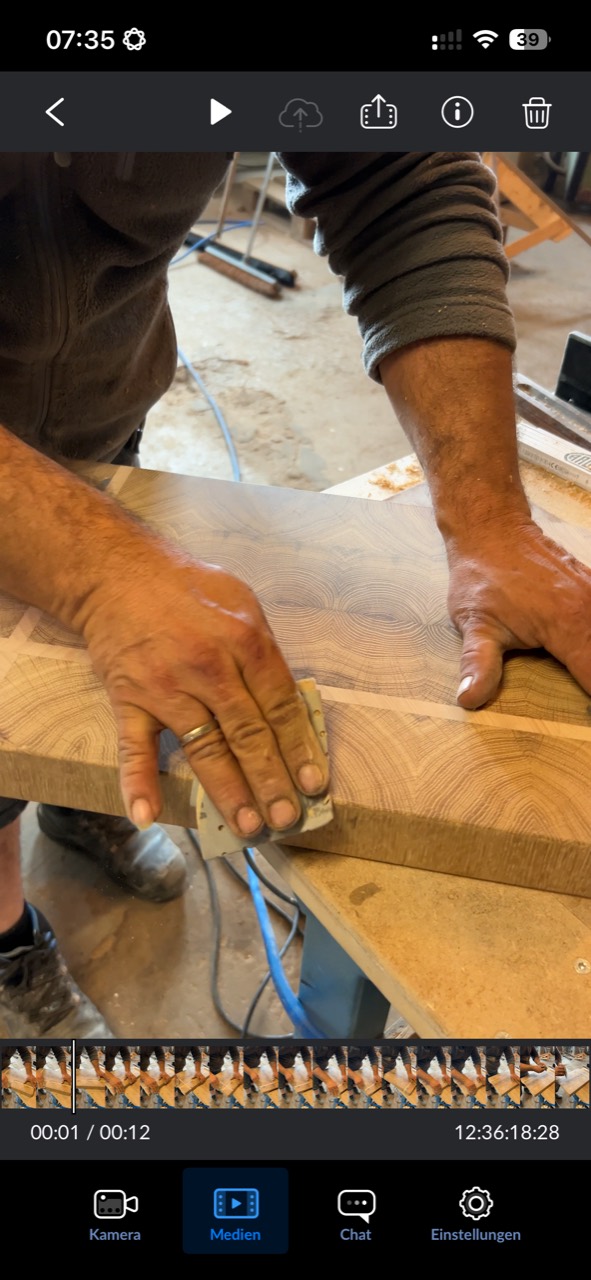
15 · Shaping and sanding
After machine sanding, the wood is dampened. Once dry, it receives its final hand sanding.
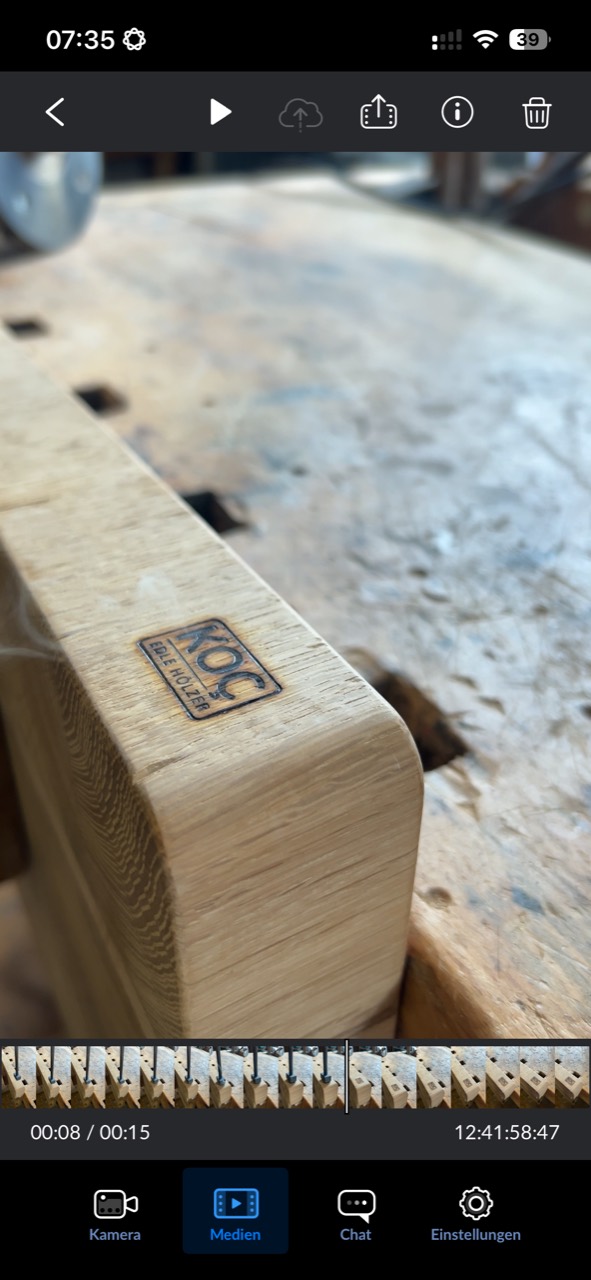
16 · Shaping and sanding
The Edle Hölzer mark on the finished edge.
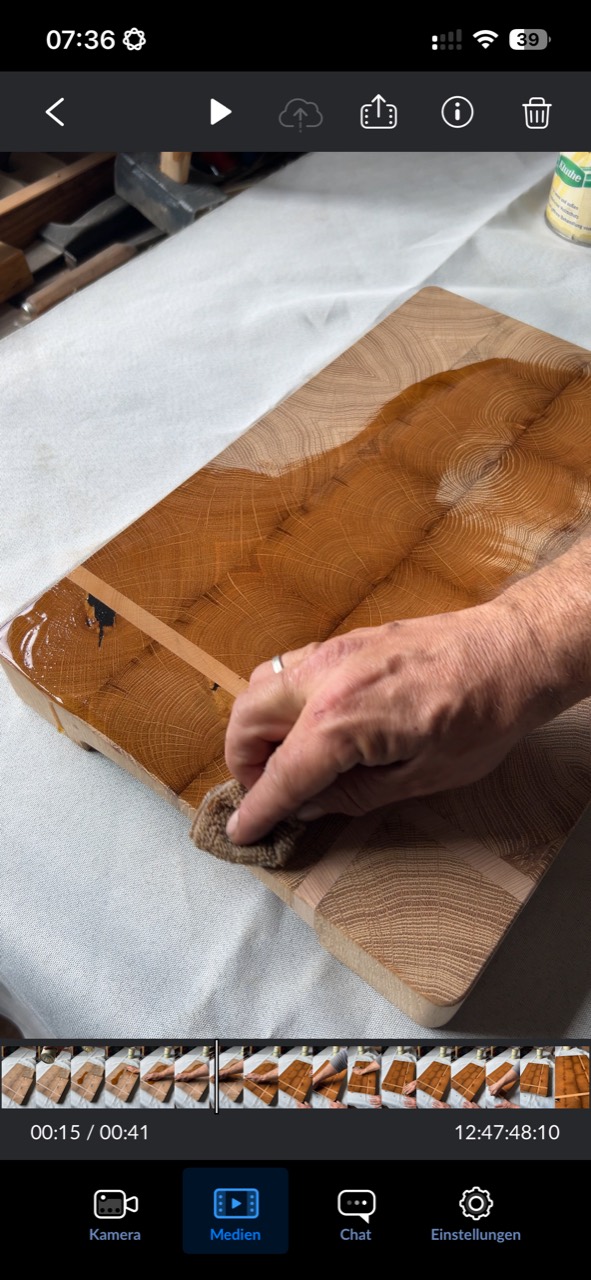
17 · Oiling
Oil makes the colour and character of the wood more pronounced.
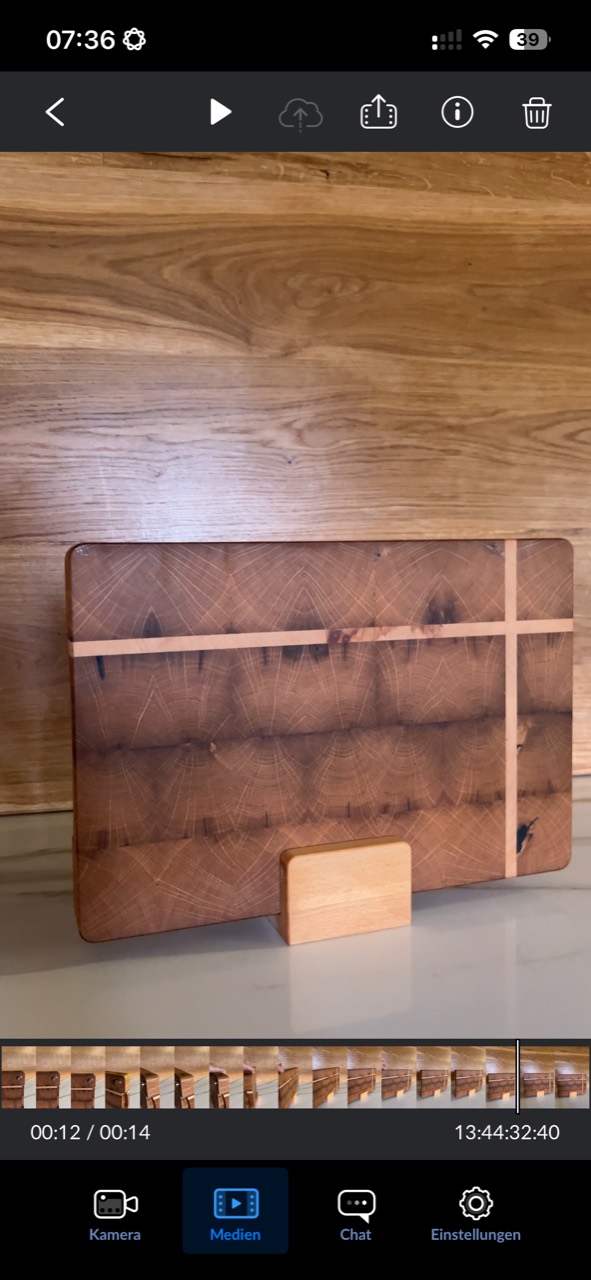
18 · Result
The finished board with a vertical and a horizontal beech line.

19 · Result
The same Erbstück photographed in the studio. This board has already been sold.
We look at cracks, grain direction, old joints and substance. If the material does not carry, it does not become an Erbstück.
The beam sets the possible format. Length, width and visual character come from the available cross-section.
Old beams can contain nails, screws or fittings. Before planer and saw, we check what is hidden in the wood.
Depending on the piece, we add light strips of maple or beech. Not as off-the-shelf decoration, but as a calm line in the material.
The cutting surface is sanded cleanly, oiled and protected with care balm. The board is meant to be used, not only displayed.
Available now & previously assigned
The first board is currently available directly. The other pieces have already been sold and show how different historic timber, light strips and proportions can feel.


Passing it on
From a growing tree to a timber-frame beam, from a building to your kitchen: this wood has a history that began long before you. You add new marks and memories. And perhaps one day you will pass it on, so the next generation can tell its own story with this board.
An Erbstück is not something to hide away. It should have a place in your kitchen even between meals. That is why every Erbstück comes with a matching stand, care balm and care instructions.
Each Erbstück carries its own number. For beams from buildings we dismantled ourselves, a wooden Erbstück card also records the town or district of origin in Central Hesse, preserving part of its history without publishing a private address.
What is possible
An Erbstück is not a configurator product. You can share wishes, but we check them against the actual beam. If an idea would harm the material or not hold visually, we say so.
Why limited
Historic timber beams are finite. Even when a beam looks large, only a small amount of truly usable material often remains after inspection, cutting, excluding unsuitable areas and building the board cleanly.
Each board is therefore possible only once. When a piece of wood is gone, it cannot be repeated exactly. We can look for a direction, but we cannot build the same board again.
Who it is for
If you want to see where a piece comes from and why it looks the way it does.
A board with weight, presence and enough calm for everyday use.
When a gift does not need to be loud, but should be allowed to last.
For people who value craft, origin and uniqueness more than instant availability.
Inquiry
Many beams are enough for only a few individual boards. Send us a short note: occasion, desired format, engraving request and whether you prefer a calm or more expressive timber image.
Inquire about ErbstückFAQ
A limited series of handcrafted cutting boards made from historic oak beams from old half-timbered houses. Each board is made on request from timber that is genuinely suitable.
That depends on the timber, format and current workshop schedule. After your inquiry, we give you a realistic timeframe.
Depending on the beam, handle recesses, a juice groove, engraving, light strips, edge character, surface finish and format may be possible.
The price depends on timber, size, construction and effort. That is why the series is handled by inquiry.
The easiest way is by e-mail with the occasion, desired format and any specific wishes. If you refer to a timber image shown here, mention it directly.