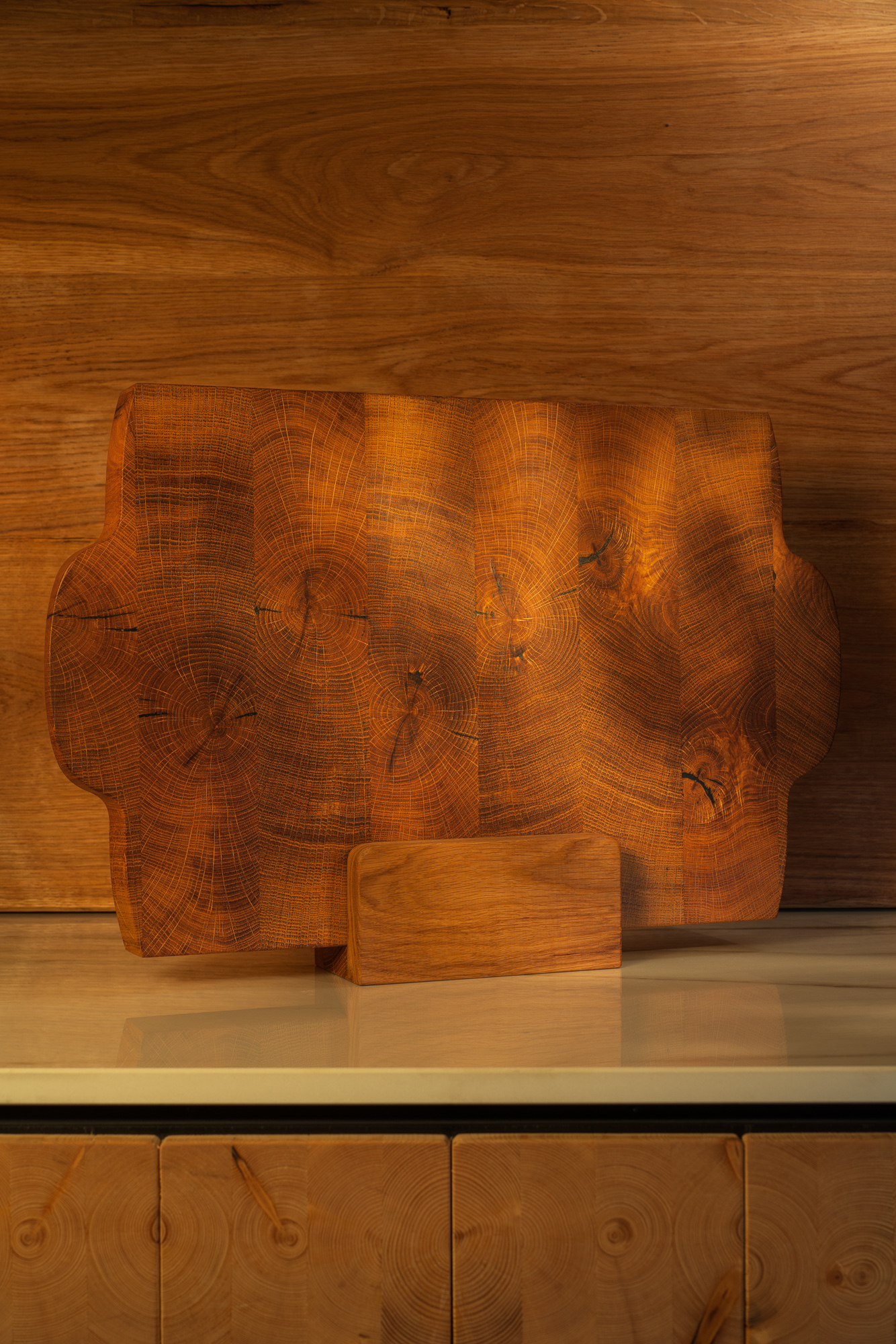
01
Plastic cutting boards can shed microplastics. Solid wood cannot shed plastic.
As knives travel over plastic, visible grooves develop. Research shows that small plastic particles can also be released in the process. How much reaches food depends heavily on the board, knife and way it is used.
A solid wood board contains no plastic that can wear away in this manner. Wood still develops cutting marks, but its surface can be maintained and sanded when needed. The long-term health implications of microplastics from kitchen boards are still being studied; reducing avoidable plastic contact remains a reasonable choice.
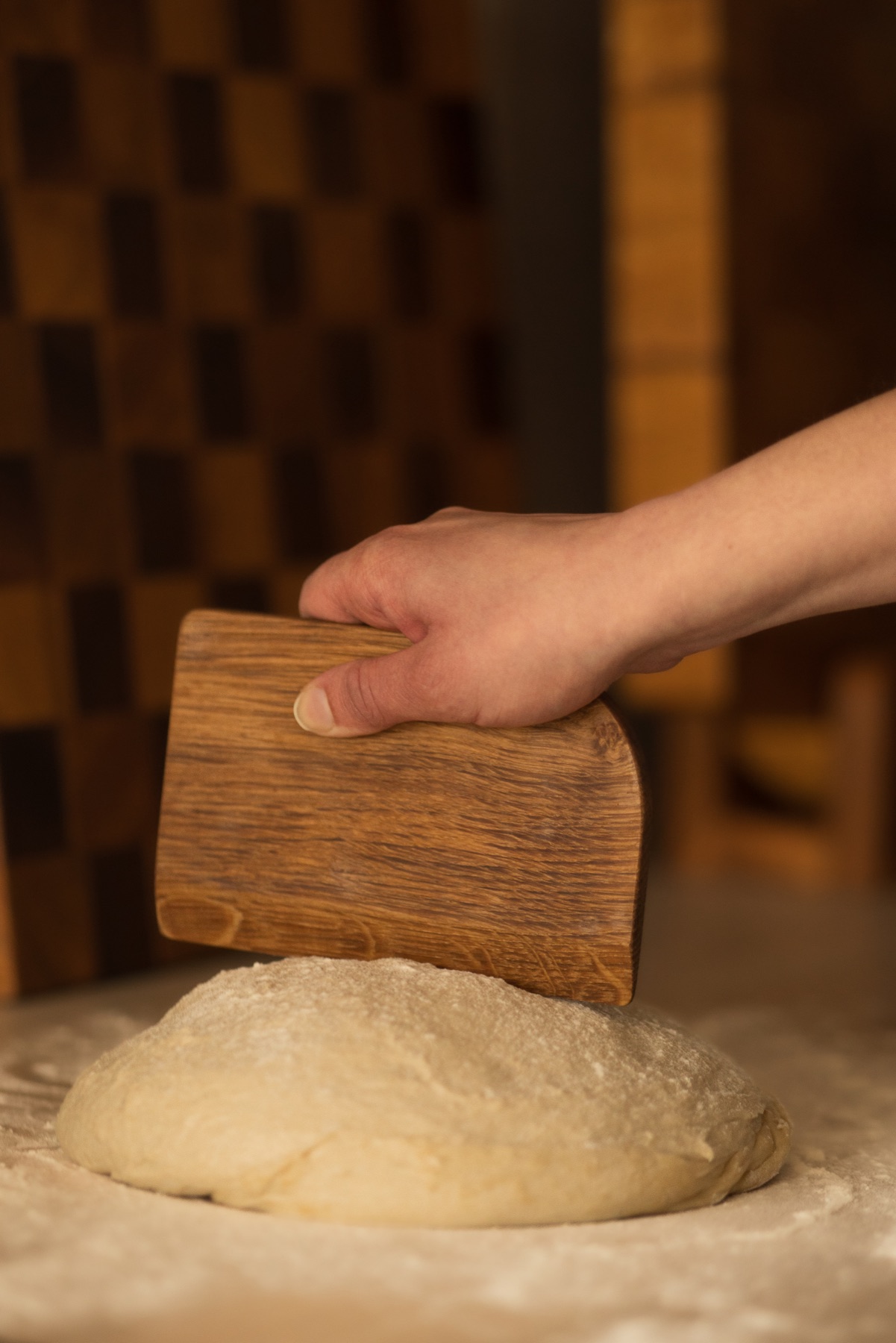
02
Hygiene is not decided by material alone.
Wood species such as oak and beech contain natural compounds whose antimicrobial properties are being studied. That does not mean a wooden board cleans itself. The same basics matter for wood and plastic: wash after use, do not soak, and let the board dry fully.
Deep cuts in plastic can become difficult to reach. A heavily used solid wood surface can be sanded and oiled again. Whichever material you choose, use a separate board for raw foods or clean especially carefully.
03
A solid wood board can be restored instead of simply replaced.
A well-made wooden cutting board can remain in use for many years and, with consistent care, for decades. Dry areas can be re-oiled, surface marks sanded, and damaged edges often reworked. The material offers several options before replacement becomes necessary.
A deeply scored plastic board is difficult to restore meaningfully. Its lower initial price is therefore only part of the calculation. If you want to keep one kitchen board for a long time, repairability and maintenance matter alongside purchase price.
04
Sustainability starts with sourcing and service life.
Wood is renewable and stores the carbon absorbed during tree growth in the finished product. Its overall footprint still depends on forestry, transport, drying and processing. Being made from wood is not a complete sustainability promise by itself.
At Edle Hölzer, we work mainly with regional timber and material already in circulation. Careful selection and workmanship allow it to remain useful for a long time. A product that can be repaired and kept for years is generally more sensible than frequent replacement.