1. Material
The wood species and construction should be named. Vague phrases such as “real-wood look” are not enough.
Workshop buying checklist
Six checks
The wood species and construction should be named. Vague phrases such as “real-wood look” are not enough.
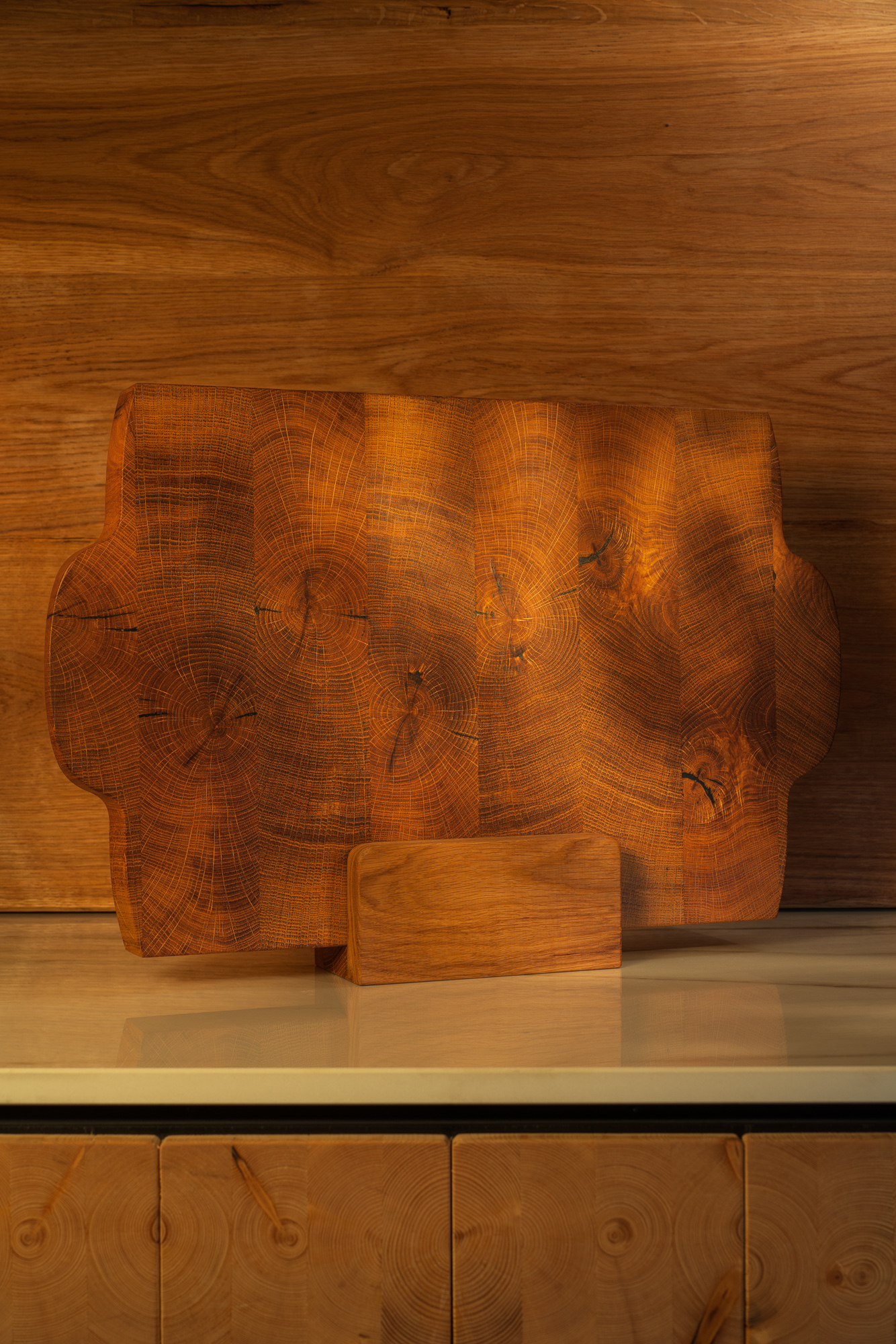
Long grain, end grain or glued segments should be cleanly built and appropriate for the intended use.
Thickness should suit the format. More material adds refinishing reserve, but also weight.
It should feel even and pleasant rather than sticky. The finish and care requirements should be stated.
The board should sit flat. Cleanly rounded edges make heavier boards easier to handle.
Solid wood can often be cared for and refinished when enough material remains. This does not replace sound construction.
Quick check
| Question | Good signal | Look more closely |
|---|---|---|
| Wood species? | clearly named | vague material wording |
| Dimensions? | length, width and thickness | contradictory figures |
| Construction? | long grain or end grain explained | pattern replaces construction details |
| Surface? | finish and care stated | no care information |
| Edges? | clean and comfortable to grip | sharp or visibly damaged |
| Use? | format suits the task | “perfect for everyone” |
| Refinishing? | possible with solid wood | material construction unclear |
From our workshop
A smooth surface cannot permanently hide material defects. Before machining, we examine grain direction, cracks, tension, possible dimensions and the planned construction. Only then do cutting, gluing, shaping and finishing follow.
A board does not need to be as thick or heavy as possible. Good construction means it can actually be used, cleaned and moved safely.
Warning signs
Without material information, properties and care are difficult to assess.
Missing thickness or changing measurements make planning harder.
Wood needs cleaning, drying and occasional maintenance.
Excess or unsuitable finish can make use unpleasant.
“The best board” does not replace material and construction details.
Origin wording should explain real work rather than merely claim trust.
Large formats, end-grain construction, material thickness, selection and multiple workshop stages can explain a higher price. Price alone does not prove suitability or workmanship.
FAQ
Look for clearly identified material, suitable construction and thickness, an even surface, clean edges and realistic care or refinishing guidance.
No. Thickness should suit size and use. A board that stays on the worktop can be substantial; a frequently moved board should remain manageable.
No. Both can be well made. End grain is more complex and usually heavier, while long grain can be more practical for a movable board.
No. Price can reflect material and labour, but does not replace clear details about construction, dimensions, finish and care.
Solid wood with enough material can often be sanded and treated again. Open joints, deep cracks or severe warping need assessment first.
Next step
Compare actual dimensions and construction, or begin with your use case in the board finder.