Hardness
Affects surface resistance, but says little about construction or workmanship on its own.
Choose the material first
Before comparing
Two boards made from the same species can feel very different because of grain direction, sorting, thickness and construction.
Affects surface resistance, but says little about construction or workmanship on its own.
Shape texture and feel. The final sanding determines how even the surface feels.
Depends heavily on size, thickness and construction. More weight gives stability but makes handling harder.
Light, use and care change natural timber. Product photographs therefore remain a guide.
Quick decision
| Preference | Direction | Check before buying |
|---|---|---|
| dark and calm | Walnut | natural colour variation and lightening |
| light and functional | Beech or maple | sorting, thickness and construction |
| pronounced and structured | Oak | grain, weight and possible iron marks |
| lively grain | Ash | contrast and grain direction |
| warm and deepening over time | Cherry | change through light and age |
Common choices
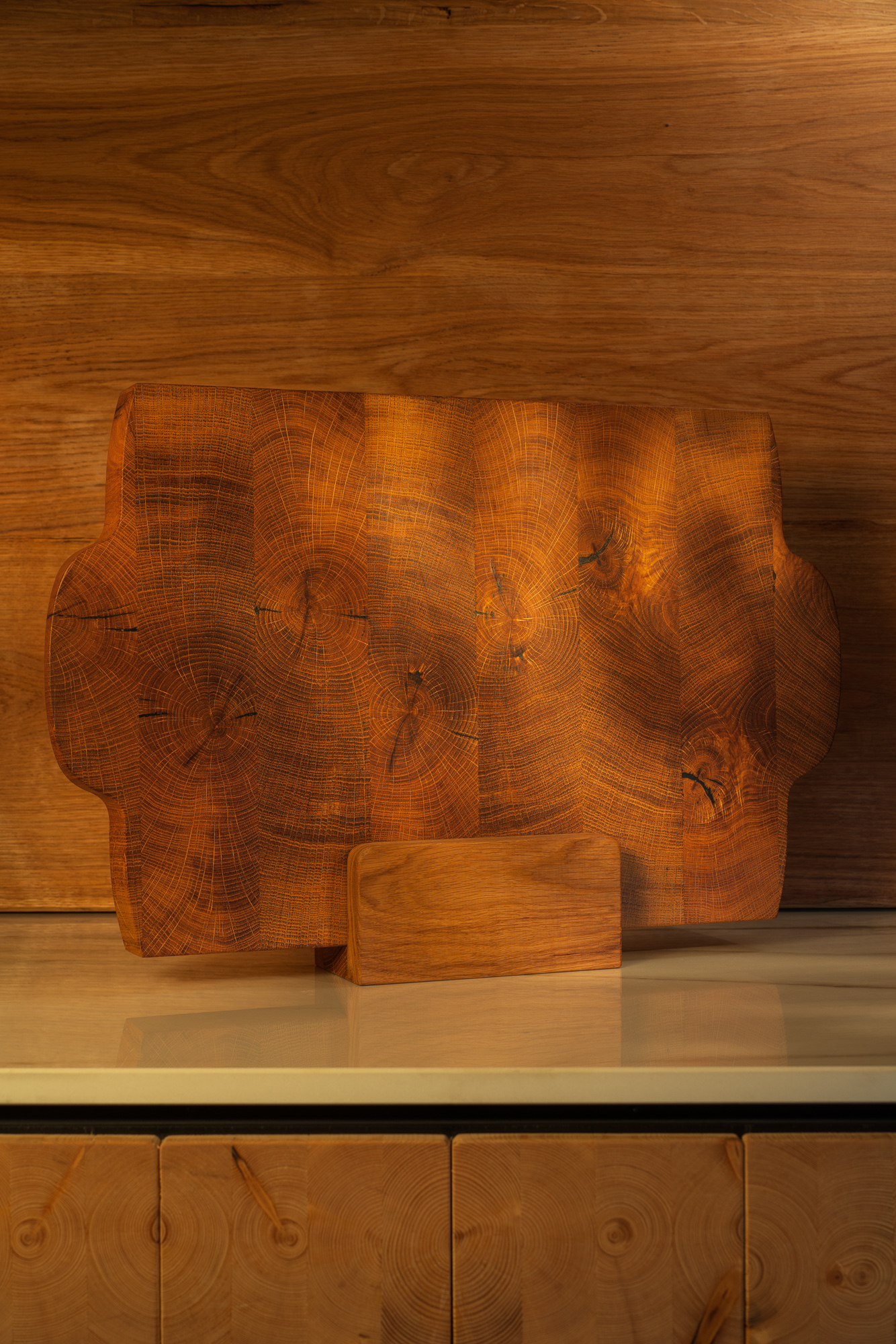
Light to medium brown, strongly structured and noticeably heavy in larger formats. Tannins can react with iron and moisture.
Dark, warm colour with natural variation. A strong option when the board will also be visible while serving.
Lighter and often more restrained. Construction and care matter more than assuming beech is automatically simple.
A light, often quiet-looking surface. The exact species, sorting and finish should be clear.
Pronounced grain with lively light-and-dark movement. Individual boards can vary considerably.
A warm colour that can change visibly under light. Patina is part of its material character.
The trade name may refer to different woods. Without a clear material description, properties and origin are difficult to assess.
Bamboo is a grass. Boards are normally built from many glued strips and should be assessed differently from solid timber.
From our workshop
We check cracks, grain direction, tension, colour and the dimensions each piece can sensibly provide. Material selection means considering name, condition, construction and later use together.
FAQ
There is no single best species. Oak, walnut, beech, maple and ash can all work when drying, construction, surface and format suit the use.
Oak can be suitable. It has a pronounced grain and can be relatively heavy. Its tannins may react with iron and moisture.
Walnut usually appears darker and calmer, while oak is lighter and more strongly structured. Construction, thickness and weight remain important.
No. Bamboo is a grass and bamboo boards are normally made from many glued strips or segments.
No. Hardness is only one factor alongside timber quality, drying, construction, surface, size and use.
Next step
Choose by use and material character. The board finder then points to available formats.