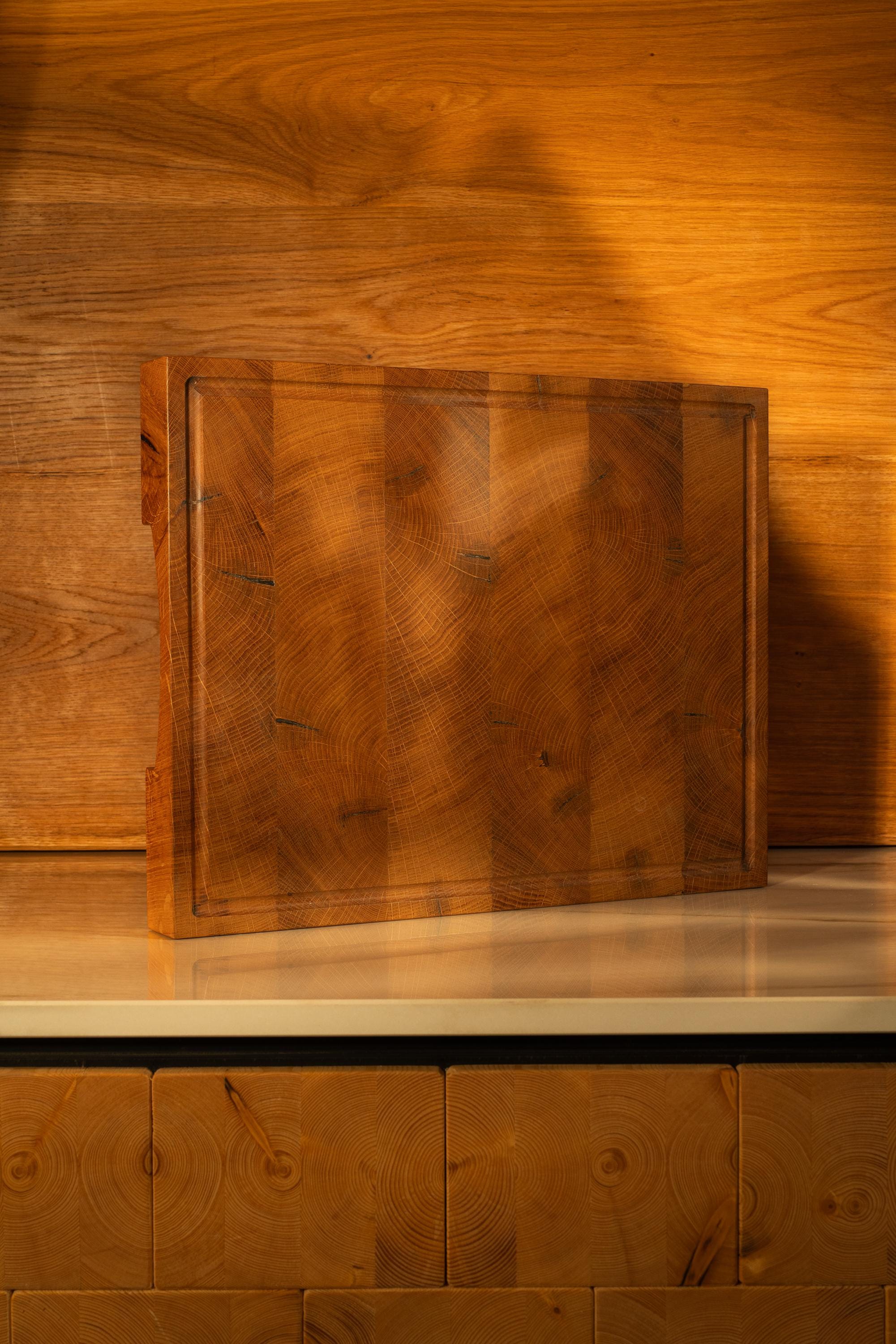
XXL oak end-grain board with juice groove
from €210.99
View product →Edle Hölzer
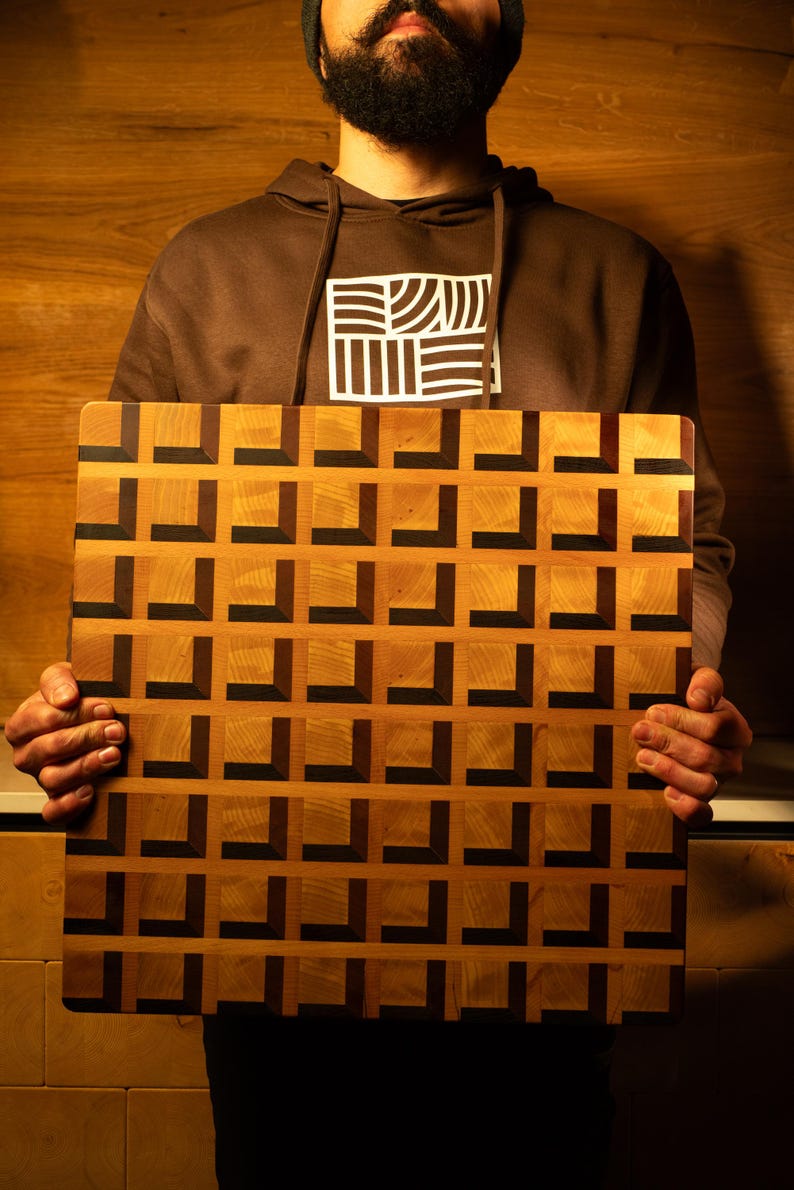
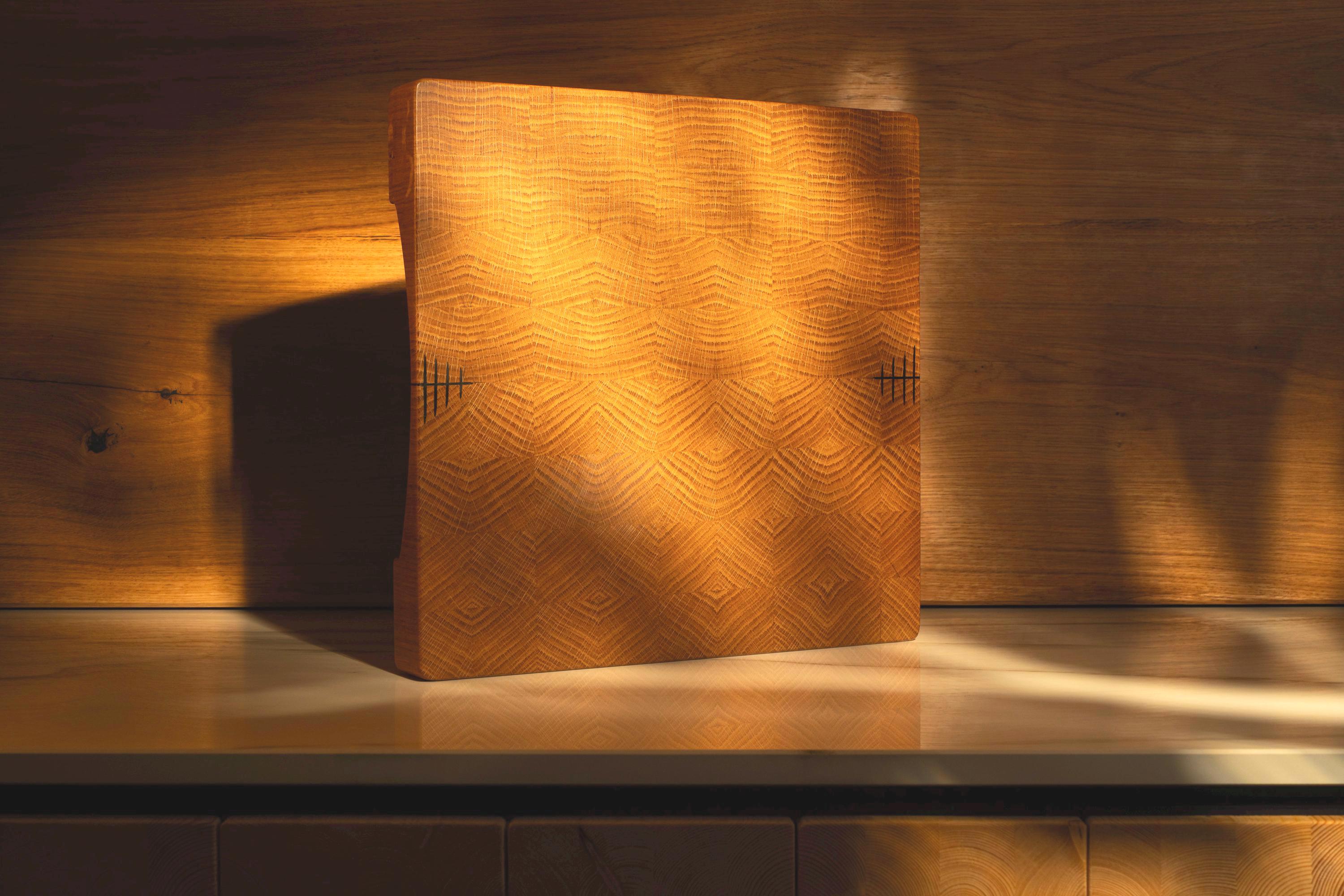
The ends of the wood fibres form the working surface. This construction creates distinctive patterns, but the pattern alone is not proof of quality.
Explore end-grain boards
Pieces are arranged so that the ends of their fibres face upwards. The arrangement creates the visible pattern and the character of the working surface.
End grain is not automatically better than edge grain. Workmanship, suitable timber and the way the board is used are equally important. Choose for your cooking routine rather than a pattern alone.
A large end-grain board can be substantial and heavy. That may suit a permanent preparation area, but makes lifting, cleaning and putting it away a different task.
Before choosing, measure the working area and consider how you will carry and wash the board. A lighter or smaller format may be more practical if it needs to move often.
Check the finish, edges, flatness and joints. A crack or opening joint is different from an ordinary knife mark and should be assessed rather than covered with more oil.
Wood responds to changing moisture. Cleaning and allowing both sides to dry are important. Suitable care supports the surface, but does not repair structural damage.
No. Compare workmanship, dimensions, handling and intended use as well as construction.
Wood can move and develop damage, especially with unsuitable moisture exposure. Ask for an assessment of cracks or opening joints.
Hand wash briefly, wipe dry and let both sides dry freely. Follow the care guide and apply suitable care thinly.
Have a question about your own piece? Talk to us directly.