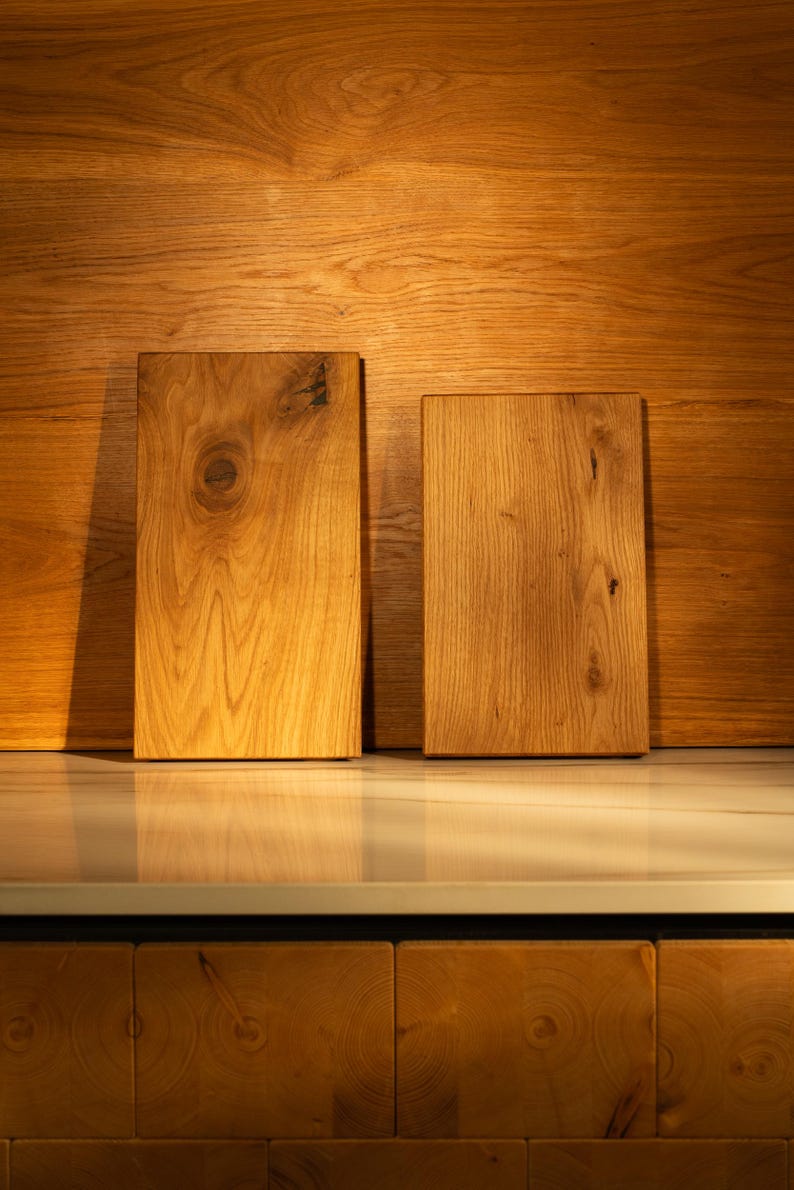
Oak edge-grain board – 34 or 38 cm
from €65.99
View product →Edle Hölzer
Start with your kitchen and how you use a board, not a ranking of wood species. Both oak and walnut can be good everyday companions.
Compare individual boards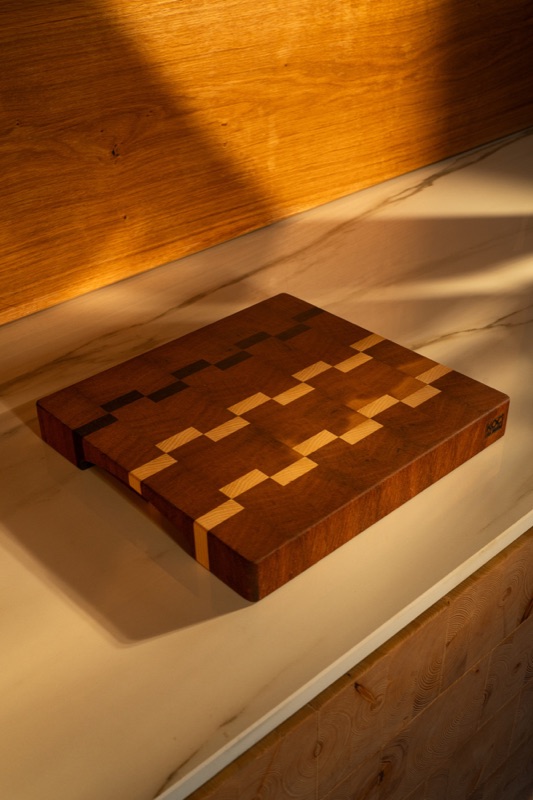
Oak has a visible grain and often creates a lighter impression. In our experience it is more resistant to visible use marks than walnut. It still needs cleaning, drying and occasional surface care.
The actual piece of timber matters: colour, growth rings, knots and construction all change the result. Do not assume every oak board will look or feel the same.
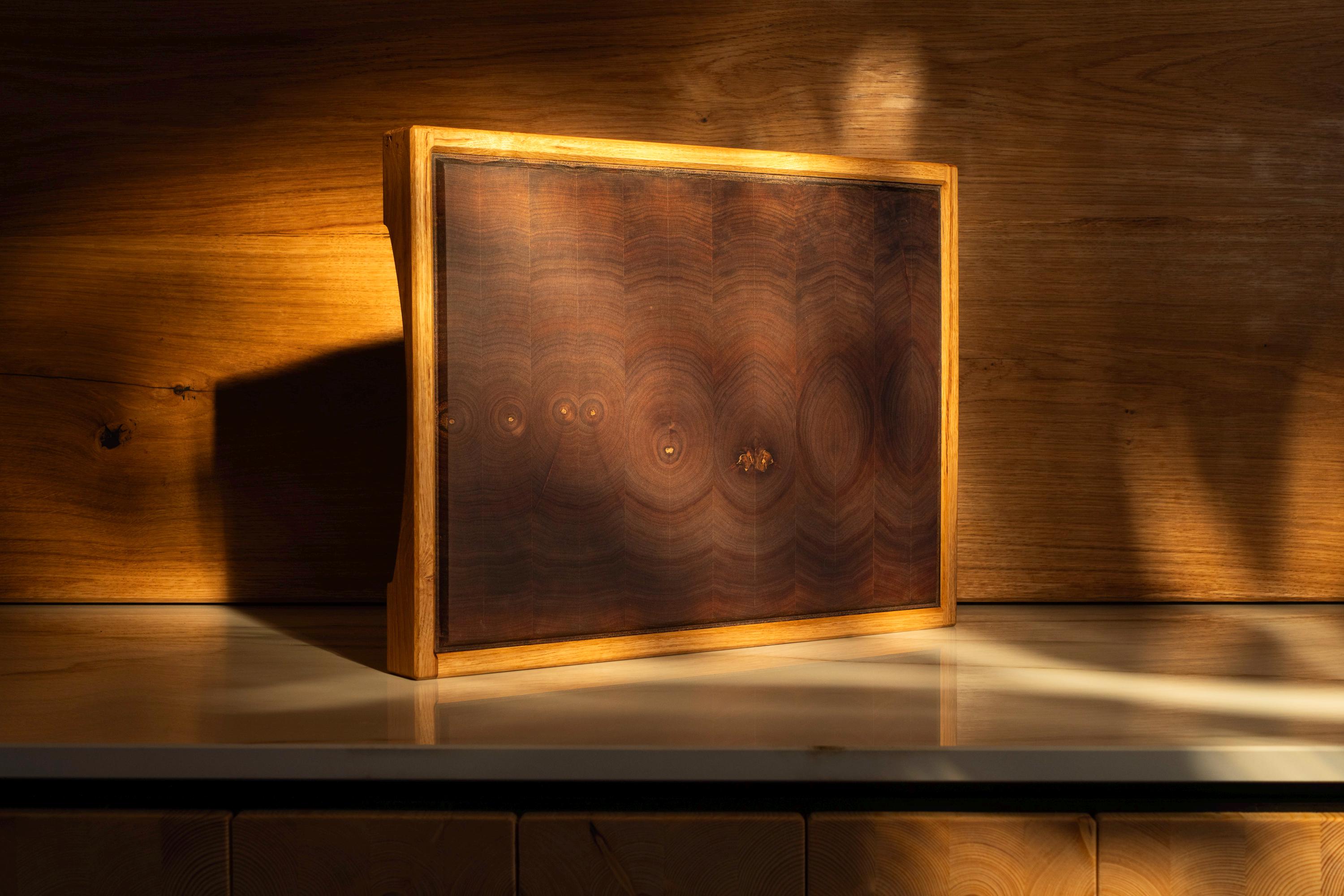
Walnut's darker heartwood can create contrast in a light kitchen or a quieter transition alongside dark cabinets. It is softer than oak and can show use sooner.
Hardness alone is not a complete guide to knife friendliness or daily comfort. Consider your knives, preferred feel, construction and care, as well as the board's weight.
Two boards of different sizes or constructions are not a like-for-like comparison. Check dimensions, thickness, weight and how easily you can lift, wash and store each one.
For serving, the presentation and handling may lead the choice. For daily preparation, the clear working area can matter more. We can help you compare available pieces and their grain before you decide.
Walnut can add contrast, while oak can continue a lighter palette. The actual worktop and grain matter.
Yes. Tannins can react with iron and moisture. A dark mark is not automatically mould; ask if you are unsure.
Compare actual boards. Size, construction, wood selection and details all influence price.
Have a question about your own piece? Talk to us directly.