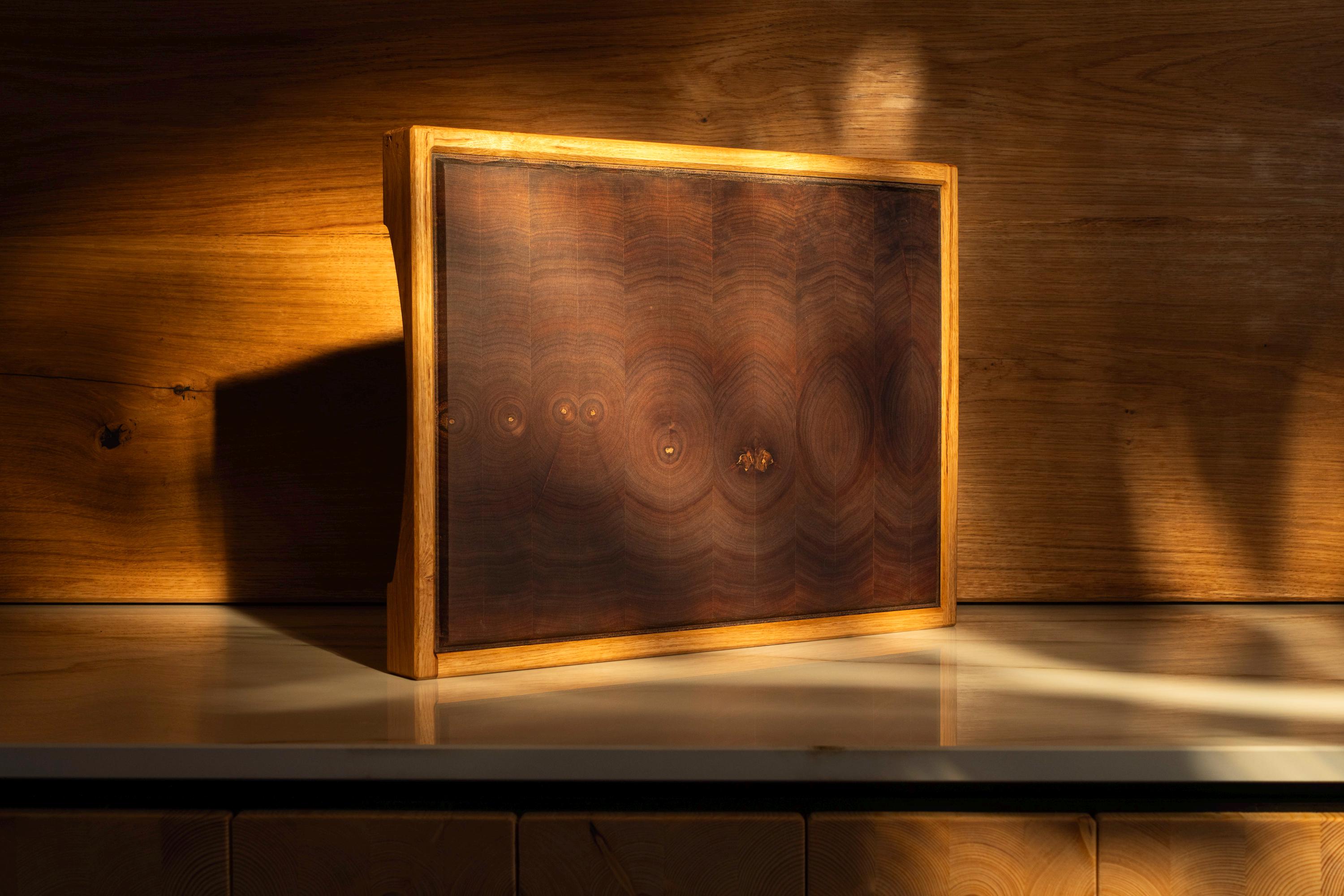
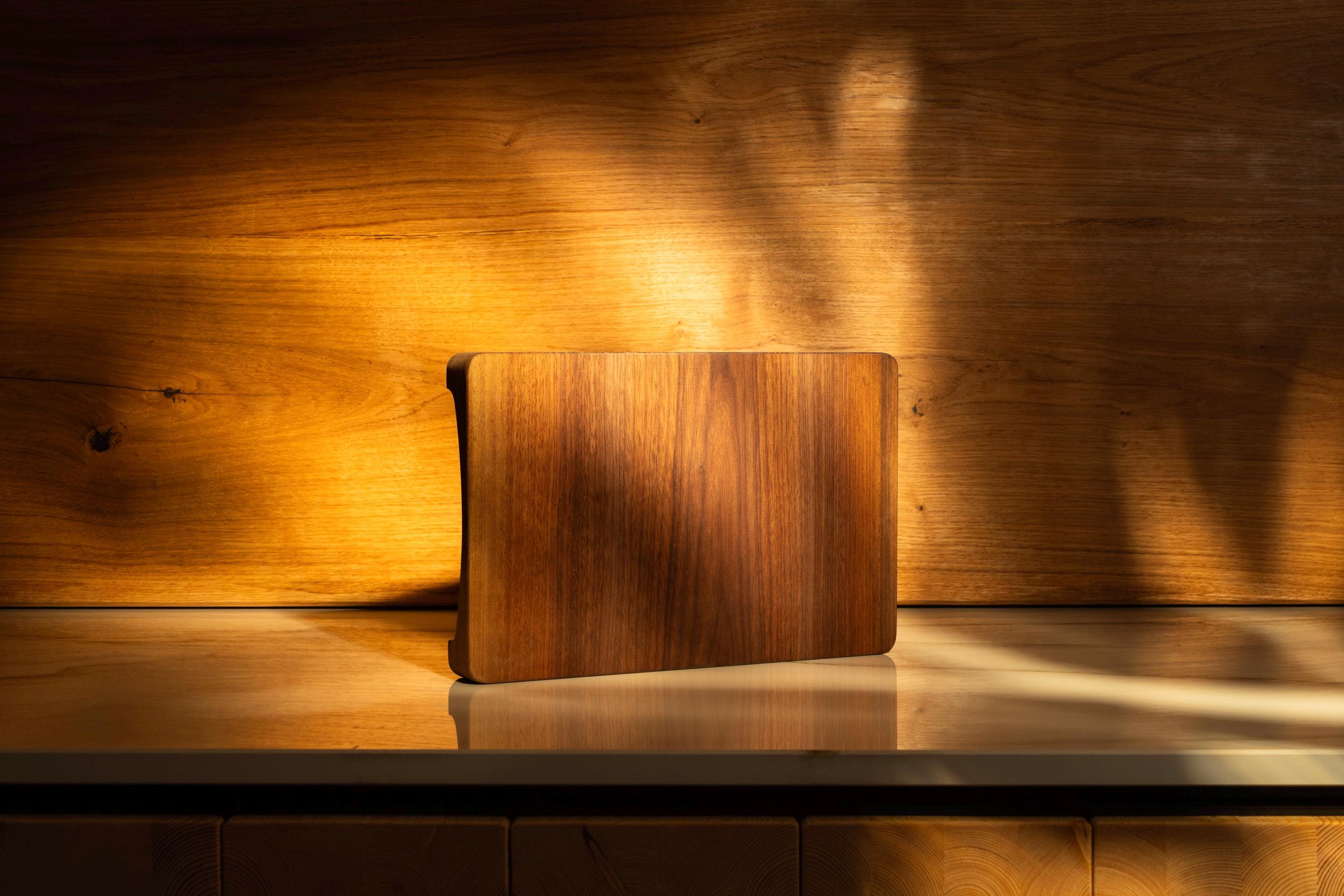
Walnut edge-grain board – 33 × 22 cm
from €59.99
View product →Edle Hölzer
Dark heartwood, individual grain and a warm feel. Walnut is a considered choice for a board that remains visible in the kitchen and is used every day.
Explore available boards
Grain, surface, weight and size all influence how a walnut board feels in everyday use. A compact board that is easy to lift serves a different purpose from a heavy board that stays on the worktop.
For our pure walnut boards, we select the darker heartwood. Natural differences in colour and grain remain part of the material. A photograph represents an individual piece, not a uniform industrial colour.
Both are possible, but the useful format may differ. Cutting needs enough clear working area; serving also depends on what you will carry, arrange and place on the table.
Think about where the board will live and whether you need to move it often. A dark walnut surface creates contrast on a light worktop and can sit quietly alongside darker cabinetry. Judge the whole piece, not only the wood species.
In our experience, oak is more resistant to visible use marks than walnut. Walnut is softer, so its surface can show use sooner. Both can be good everyday boards.
Do not decide on hardness alone. Your knives, preferred feel, kitchen design, the board's weight and your care routine also matter. We help you compare actual pieces rather than treating a hardness number as a complete buying guide.
Construction changes the visible grain and the character of the working surface. Compare the available formats and their weight as well as their appearance.
A larger end-grain block may suit a permanent preparation area. A smaller edge-grain board can be easier to lift and put away. Neither description alone tells you whether a board fits your kitchen.
Clean briefly by hand, dry with a cloth and let both sides release moisture. Apply suitable care thinly and remove excess rather than leaving a glossy layer.
Wood moves as moisture changes. Avoid prolonged soaking, dishwashers and drying against strong heat. If a board needs more than routine care, ask us whether refurbishment is appropriate for its condition.
Yes, when construction, dimensions and care suit the intended use. Expect natural signs of use rather than an untouched decorative surface.
No. In our workshop experience, oak is more resistant to visible marks. The choice should also consider feel, weight and appearance.
Natural colour and grain vary between pieces. Wood selection and construction also affect the finished appearance.
Have a question about your own piece? Talk to us directly.